My Adventure: by Rob Smith
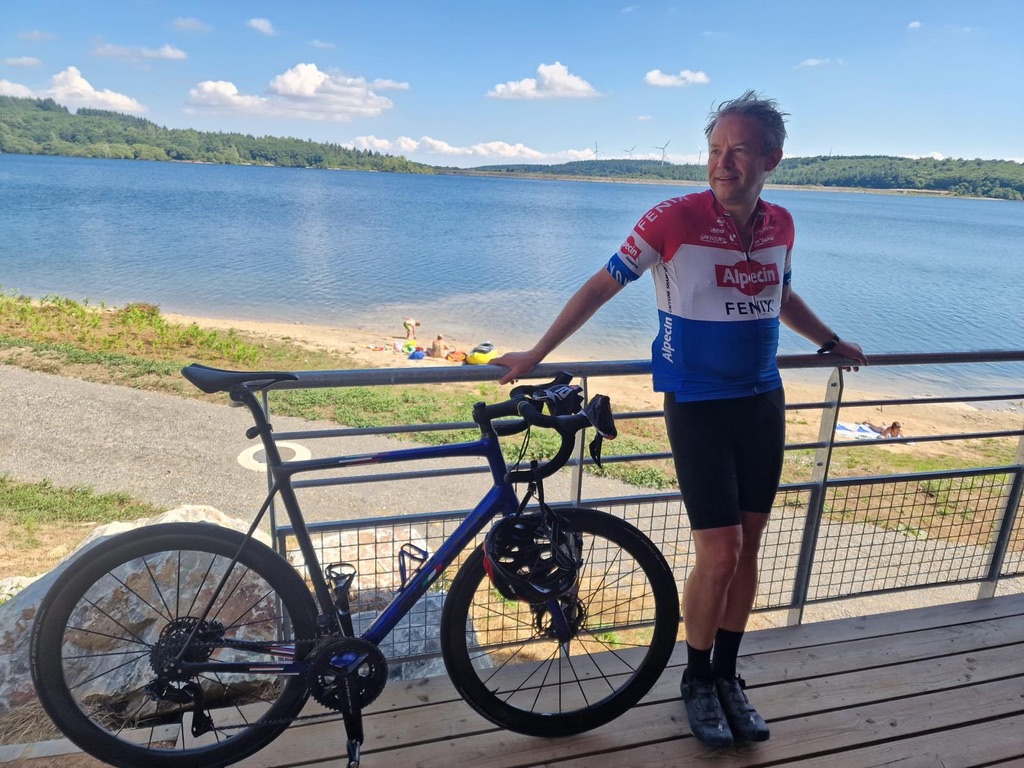
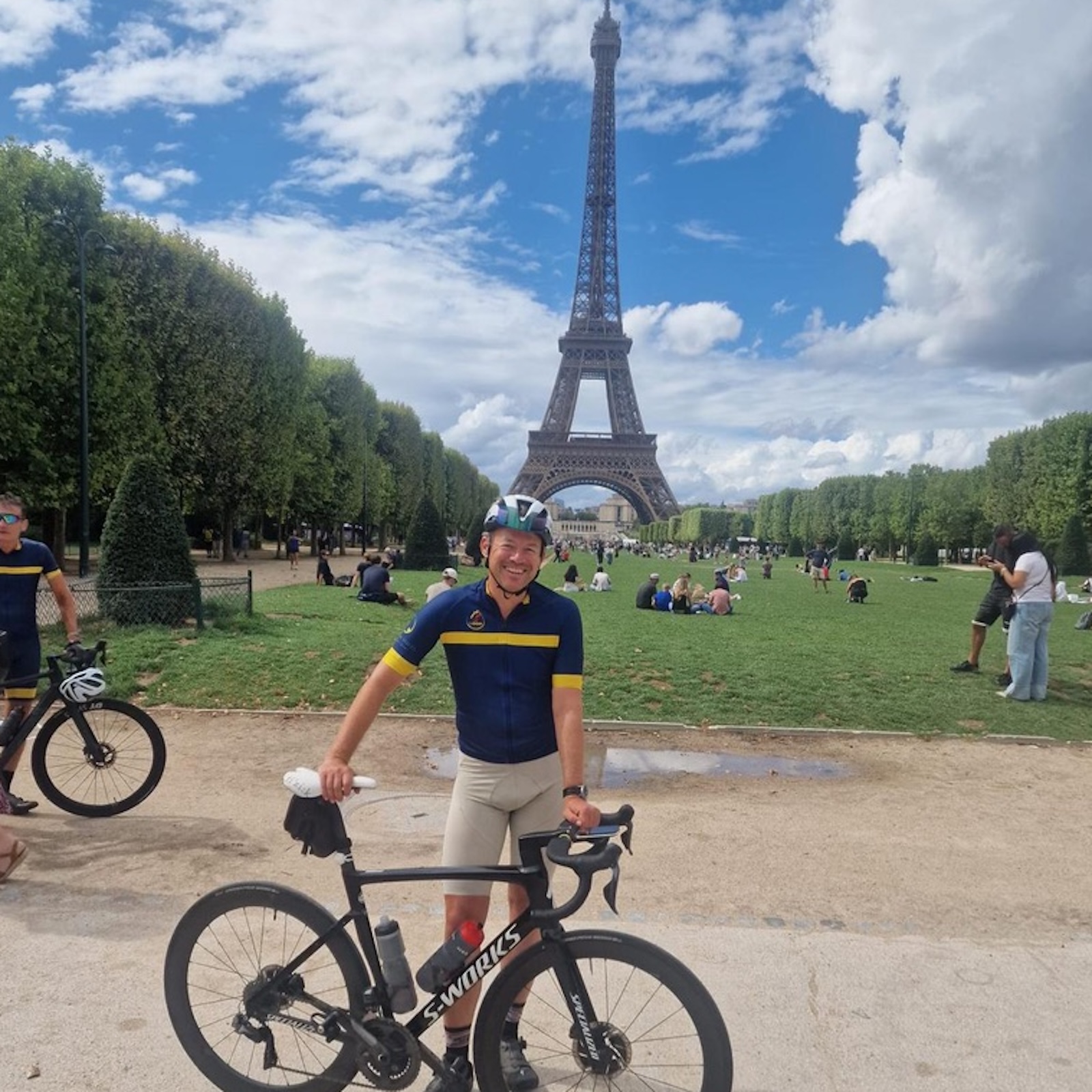
Le Loop, previously called the ‘Tour de Force’, is a multi-day cycling event following the exact route of the Tour de France, but seven days before the professionals race it. The event is a charity ride for the William Wates charitable foundation for disadvantaged children. There are a number of options, or ‘loops’ as they’re called, ranging from an entry level (riding two of the easier stages) up to the extremely challenging – riding the entire tour, which is known as the ‘grand loop’ which is over 3,300km (2,000 miles) long, with over 50,000m of ascent (170,000 ft). I’ve been working my way up through the loops, starting with a 3 stage ride in 2022, then 4 stages in 2024 and 10 stages this year.
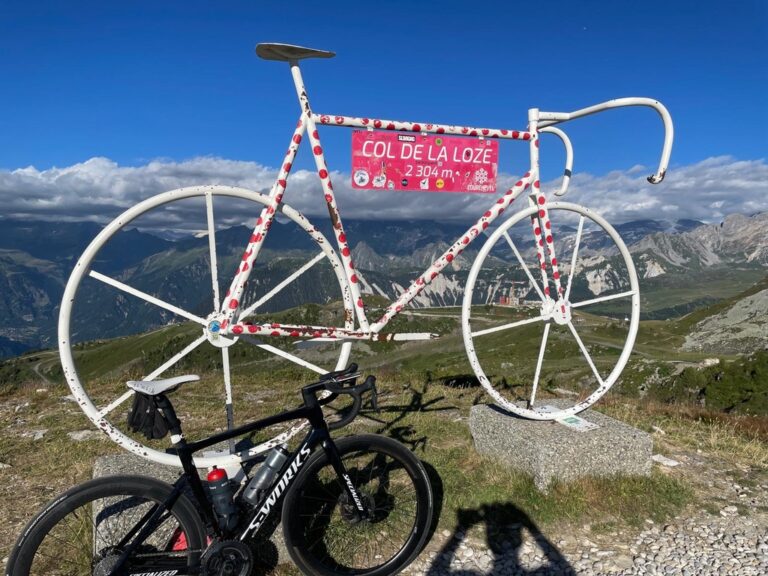
Many will have experienced multi-day cycling events, some of which I have also completed, but Le Loop is a different proposition for a number of reasons. The first, and most obvious, difference is that the route changes each year to follow the Tour de France. This allows riders to enjoy the incredible variety of roads, mountains, lakes and other scenery that is found across France as well as other countries.
The 2026 tour starts in Barcelona for example. This is done whilst challenging yourself on iconic climbs, including this year’s Mont Ventoux, and the Col du Tourmalet. In addition, as the ride is seven days ahead of the pro race, I have often experienced fans in motor homes present at key locations of the race, often well lubricated and cheering the amateurs on. You also get to see many of the villages bedecked in their Tour finery for the TV cameras. This year’s highlight was a huge Ferris wheel made entirely from about 50 bikes welded together. I have no idea who thinks of these things and then puts them together.
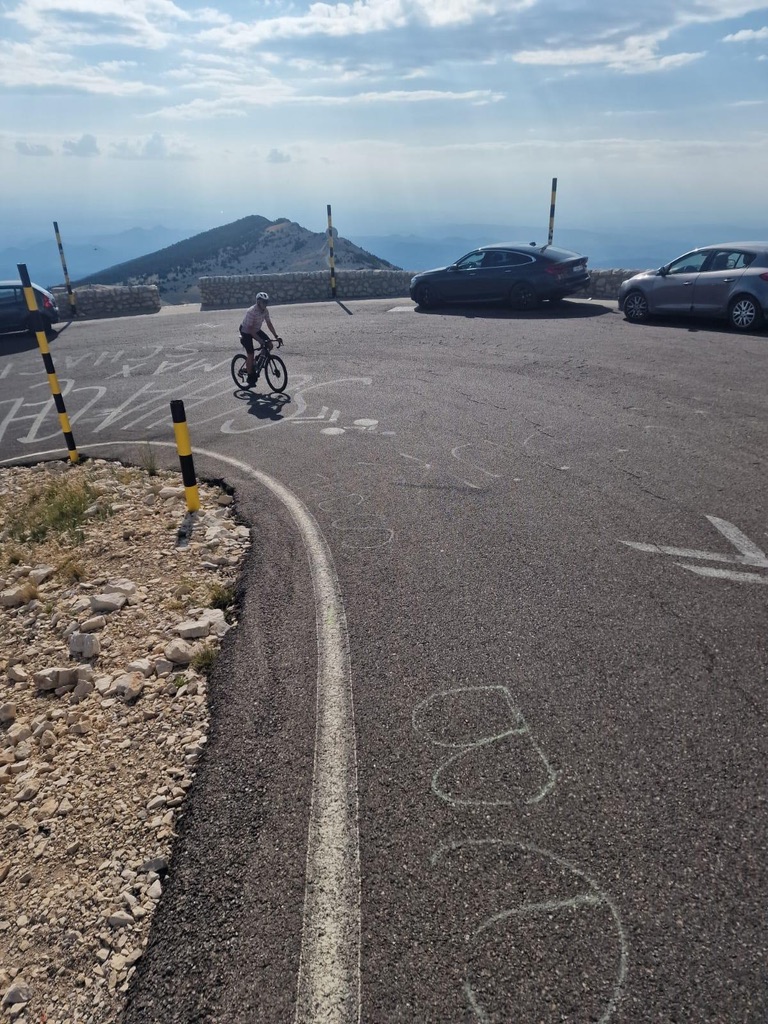
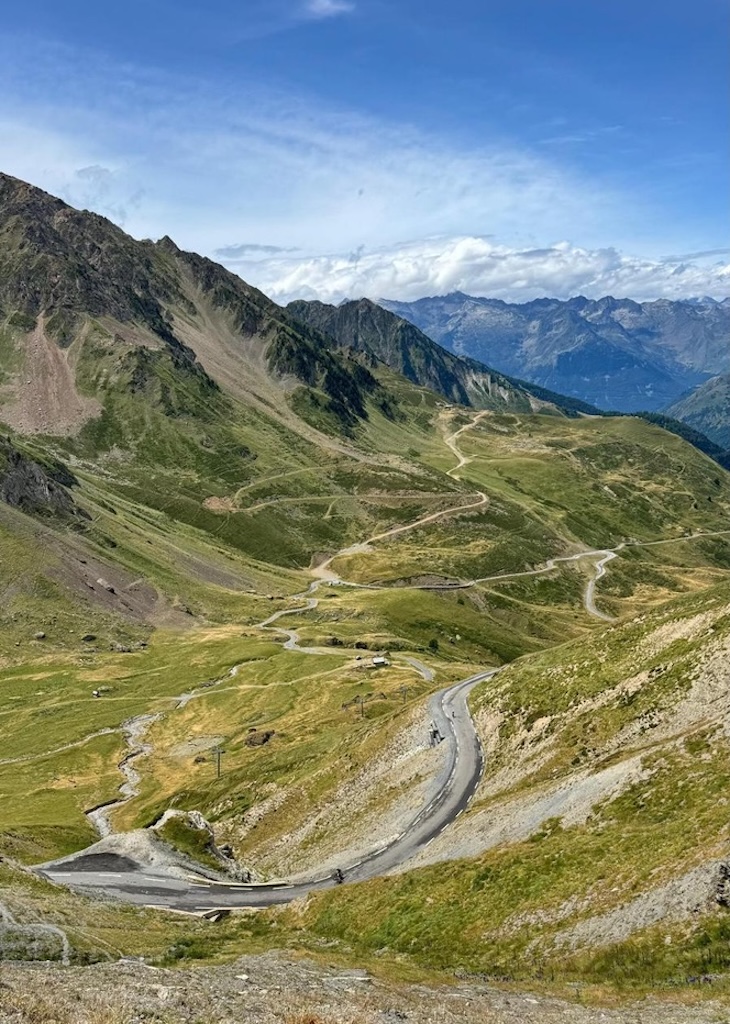
I love then getting to watch the pros tackle the same stage seven days later, recognising the route. To be honest though, they complete the stages in just over half the time it takes me! This year’s finish in Paris included the cobbled climb to Montmartre that was a feature of the 2024 Olympics, which was pretty spectacular. But the pros didn’t have to contend with the street market that was set up in the road as we cycled through. At least dismounting to weave our way through the tourists gave the legs a nice break.
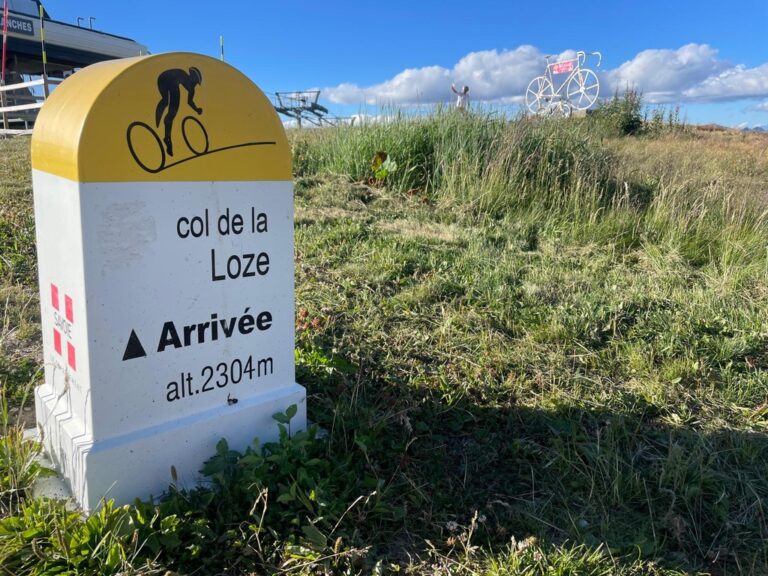
A second difference is that Le Loop stages are set up differently compared to other commercial cycling events. Le Loop is not a race, and there is no timing cut-off enforced on any stage, so if a rider wants to continue and finish a stage in their own time, the organizers are committed to supporting them to do so, even if sometimes riders need lights to finish the job in the dark on the longer and more challenging stages. This year, riders were coming in after 10pm on both the Superbagneres and Col de la Loze stages for example. Long days.
Additionally, as with other events there are feed stops, but a strict Le Loop rule is that no rider can leave the first feed stop, typically just over an hour into the ride, until all riders have arrived. This means that the faster riders will typically slow down and ride with others for the first part of each day, meaning that the group gets to know each other much better than is usual. Amazingly, I have never heard any of the really strong riders complain about this on any of the three Le Loop events I have done. Le Loop also always has a minimum of two doctors who are riding the route as well as a ‘lead rider’ who is very chatty as he rides the route and provides daily briefings, debriefs and awards.
Finally, the charity element, along with the above, means there is a different ‘vibe’ to the event. Yes, it is serious cycling. And yes, it is a real endurance event, particularly if you’re attempting the ‘Grand loop’, but the staff, the riders and the set up make it feel different.
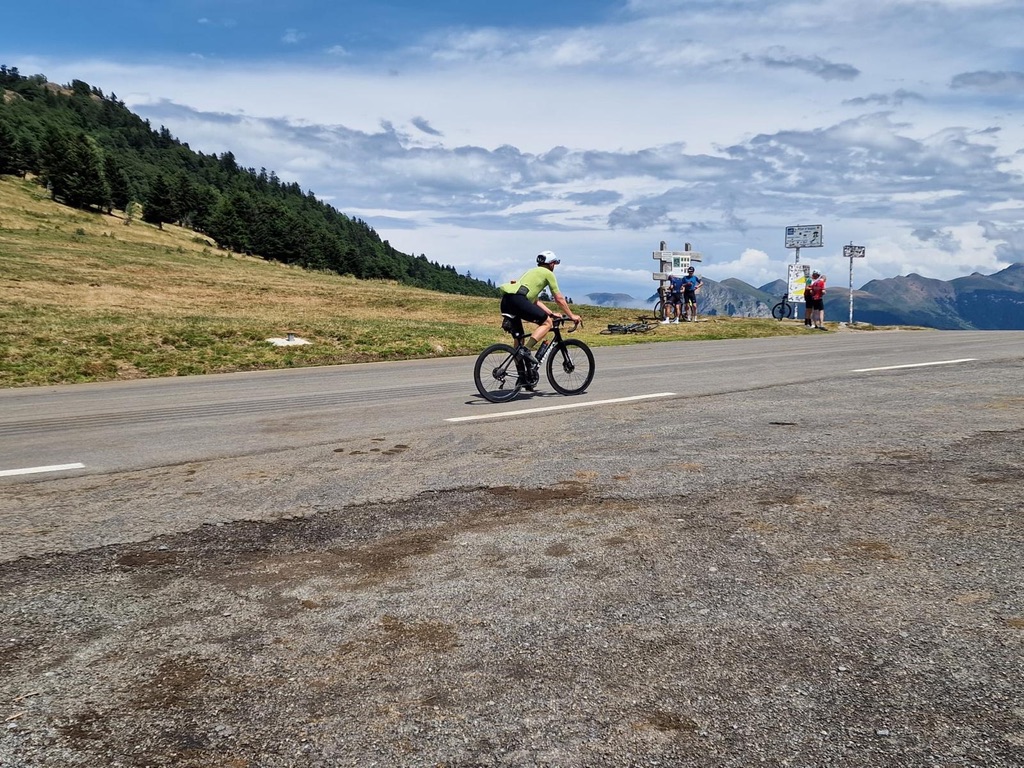
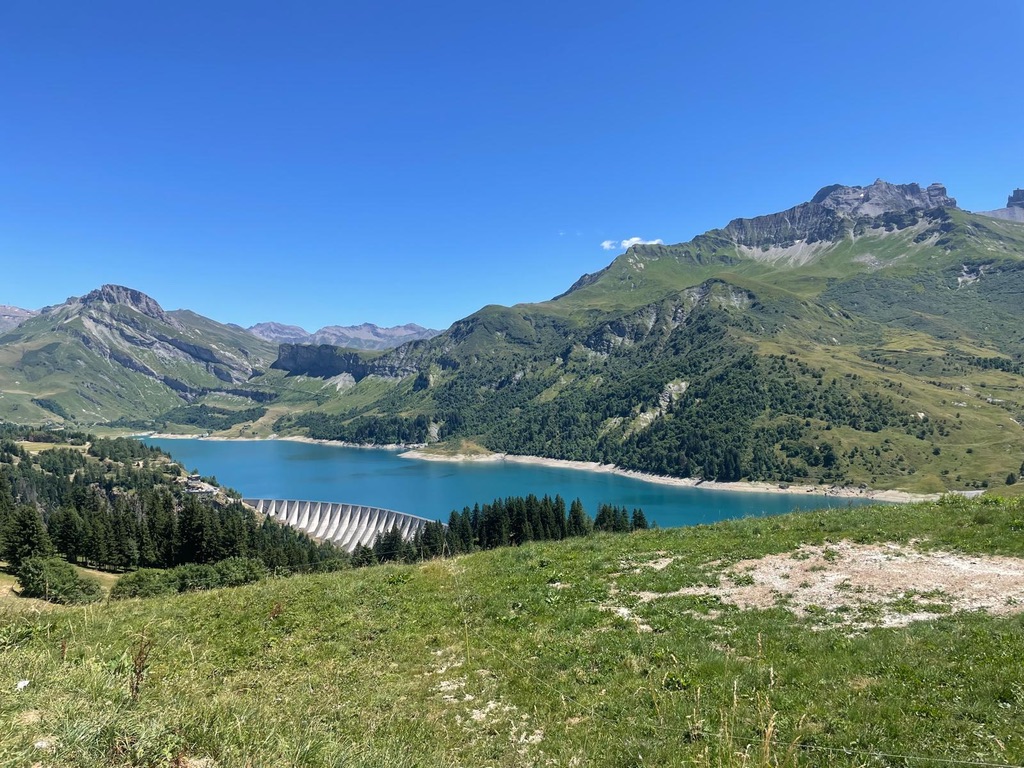
On a couple of the days this year and last, we even had the recipients of support from the charities riding with us for day, and talking about their experiences over dinner in the evening. One young guy who had never ridden a road bike, rode the Tourmalet with us. It’s a fantastic event.
This year I took on the “second half” loop, which included stages 12 to 21 of the Tour de France. This included two stages in the Pyrenees, two in the Alps, the Mont Ventoux stage, a day in the Jura, a mountain time trial and then three flatter stages, including the final in Paris. I should declare though, if anyone is considering the event, that even the flatter stages often have 2,000m of vertical climbing in them. There are no purely flat roads included these days it seems. The hardest stage for me was stage 17, which I honestly hadn’t even bothered to look at before as it seemed so easy compared to the mountain stages. 175km, 1,900m of climbing and with only one categorized climb (Cat 3) all day. It was a nightmare though, hot and with a very strong headwind all day that made it feel like riding in a wind tunnel.
Halfway through, I managed to take a wrong turn that then added 8km to the ride, but more importantly also meant I had to do a few hours on my own into the hot wind. To cap off the day, I then had a double puncture which I fixed while contemplated the following, conventionally more difficult, days in the Alps. “Character building”.
It was a great group of people, although it varies in size each day, depending on the stage from about 50 to about 100 riders. The UK provided the biggest proportion of participants – it is a UK charity after all – but there was also a good number from Ireland, Canada, US, Australia, New Zealand, Germany and Switzerland. It’s a mixed ability peloton, united by the desire to ride the Tour de France, whilst supporting a fantastic charity.
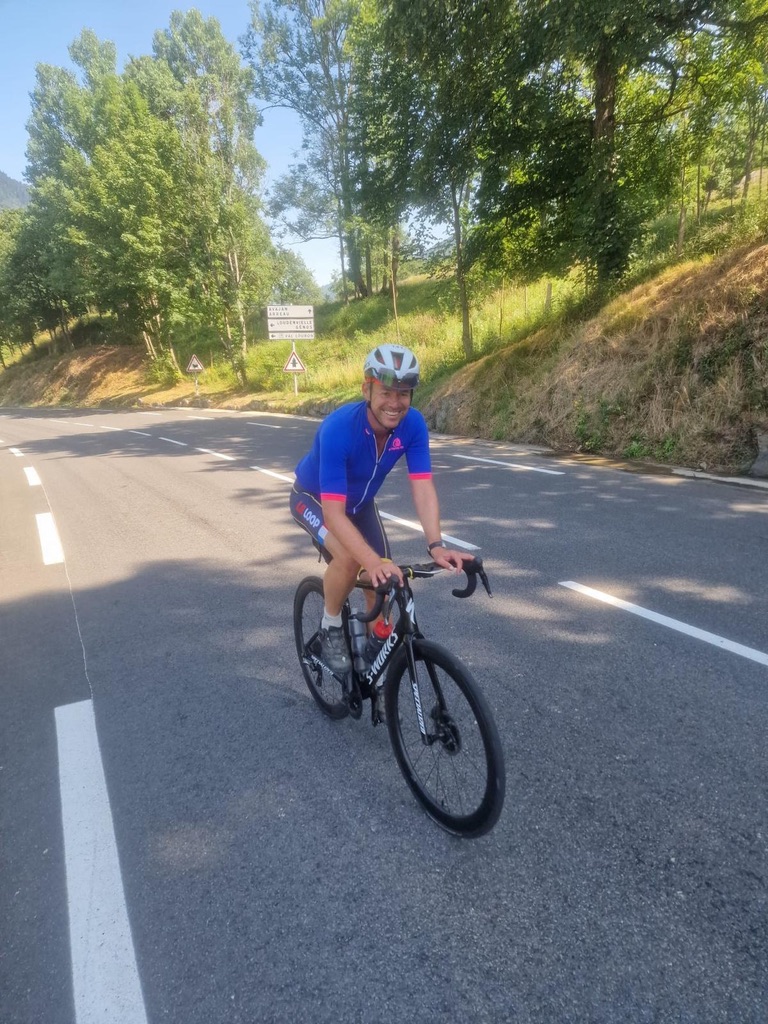
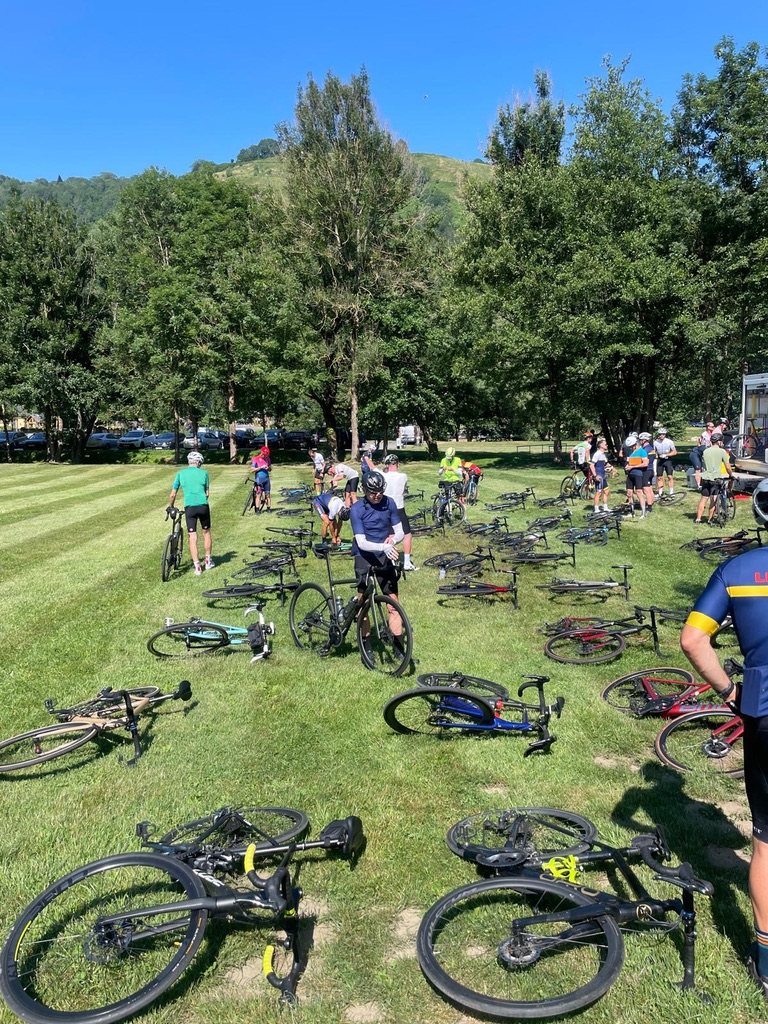
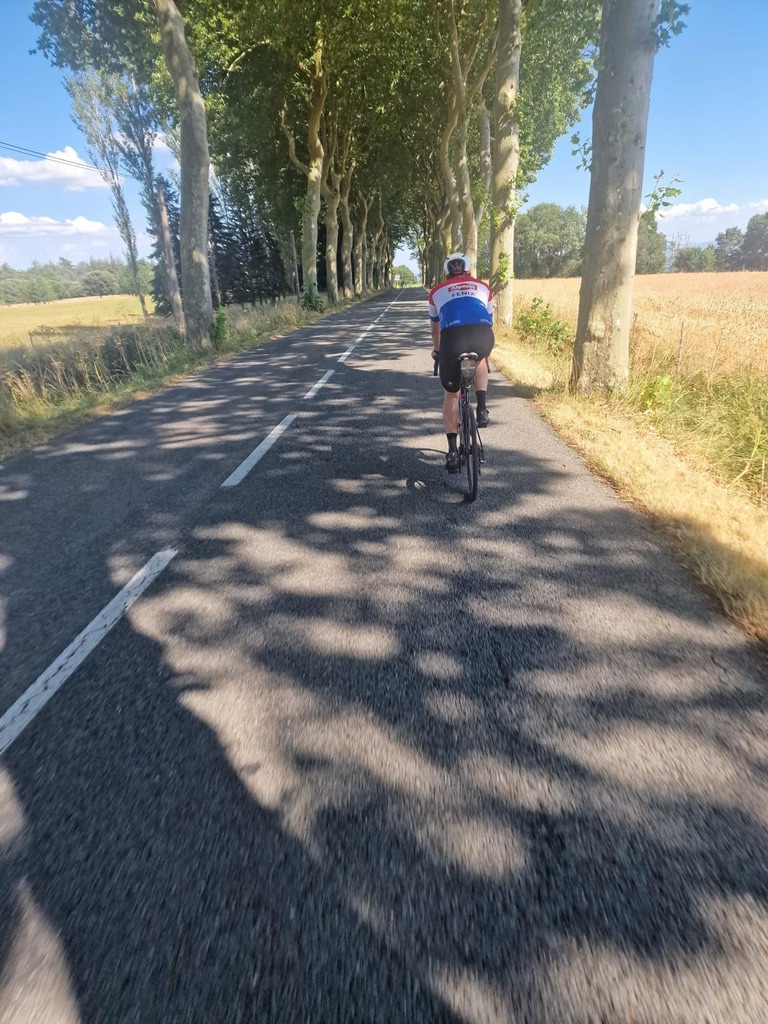
On a small logistical note, this is an in-demand event and it sells out each year, particularly the option to ride the entire Tour. For 2026, this ‘Grand loop’ sold out within a day as expected, but there are many other options available, such as the 10-day event I took part in this summer (2025).
Advice to Others:
Sign up early! This not only gets you a place on a very popular event, but also provides training motivation throughout the winter. Well, it did for me anyway. I confess that I find it really hard to train until I have an event booked and I know what I am training for. I’m a very poor, and ill-disciplined trainer without this motivation and focus, and a fairly poor one even with it!
Even a two-day loop will require some structured training. During the winter I essentially use Zwift to keep my fitness and endurance at a reasonable level, but I don’t go crazy, just riding maybe 8 hours a week. About 4 months from the event, I try to increase this to more like 10 hours, with a mix of interval training and longer rides of around 4 hours. Finally, in the 2 months before the event, I try to get in a few longer rides (6 hours) as well as at least one very long one (8 hours). It isn’t enough, I realize, but it is all I can manage with a family and job and luckily Le Loop does not have to be in the ultra-endurance category so it is pretty accessible. Bring on retirement!
Prepare mentally for early starts. Because the finish town of each stage on the Tour almost never coincides with the next day’s start town, there are many coach transfers involved. It’s a Tour thing – local French Mayors bidding to host the tour, which plays a large part in dictating the route. It was unsurprising to hear that a lot of the pros were complaining this year (2025) about the distance of some of the transfers.
Also, note that although the hotels are good, they are not 5-star luxury. I have quite often been told by reception that the pro teams are staying at these hotels the following week – they do not have luxury either, although I suspect their tour coaches are better than ours! The organisers – Sarah and Kate – are incredible. They’re very experienced and passionate about the event and the charity. Email them with any questions you have, I bet they can help!