
My Adventure: by Kris Simonson
Tired and hungry in the dark, I was scarfing down the last of my chocolate pudding when rustling sounds near my tent caught my attention. Large eyes reflected back at me from the glow of my headlamp and I instantly knew it was a bear! Fearful it would destroy my tent simply out of curiosity I raced toward it shouting, swearing, and waving my arms. I couldn’t risk losing my shelter on day 4 of my week-long 125 mile wilderness adventure. Though it took several attempts, I eventually convinced the Rose Lake bear, nicknamed Bruno by previous travelers, to lumber back into the forest. Fortunately, the only casualty was the pocket of my personal flotation device (PFD) which Bruno ripped open to pathetically lick an empty cheese wrapper I forgot to dispose of properly.
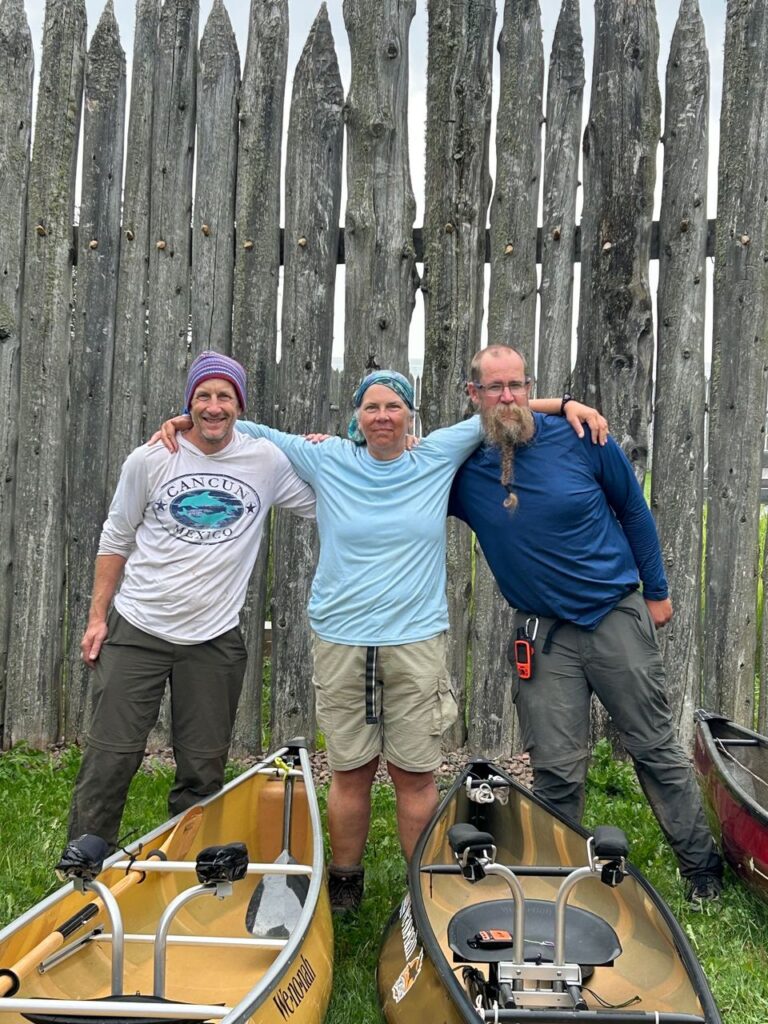
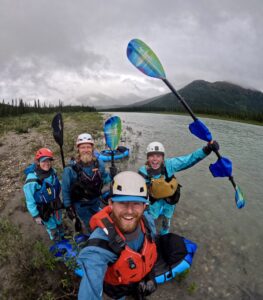
I was in the midst of my first attempt at the Border Route Challenge, an annual event where participants can select one of three different length adventures in the Boundary Waters Canoe Area Wilderness (BWCAW) following the border lakes and rivers between Minnesota and Canada. I had chosen the 125 mile Moose Lake Challenge. The sister events include the Voyageur Challenge (225 miles) and the Kruger-Waddell Challenge (260 miles) named after 2 famous canoe adventurers. All 3 of these challenges are self-supported adventures requiring participants to paddle and portage their gear without any outside support or resupply. You can travel solo or as part of a group (up to 4 canoes and 9 people). The event began in 2015, and 10-20 people participate each year.
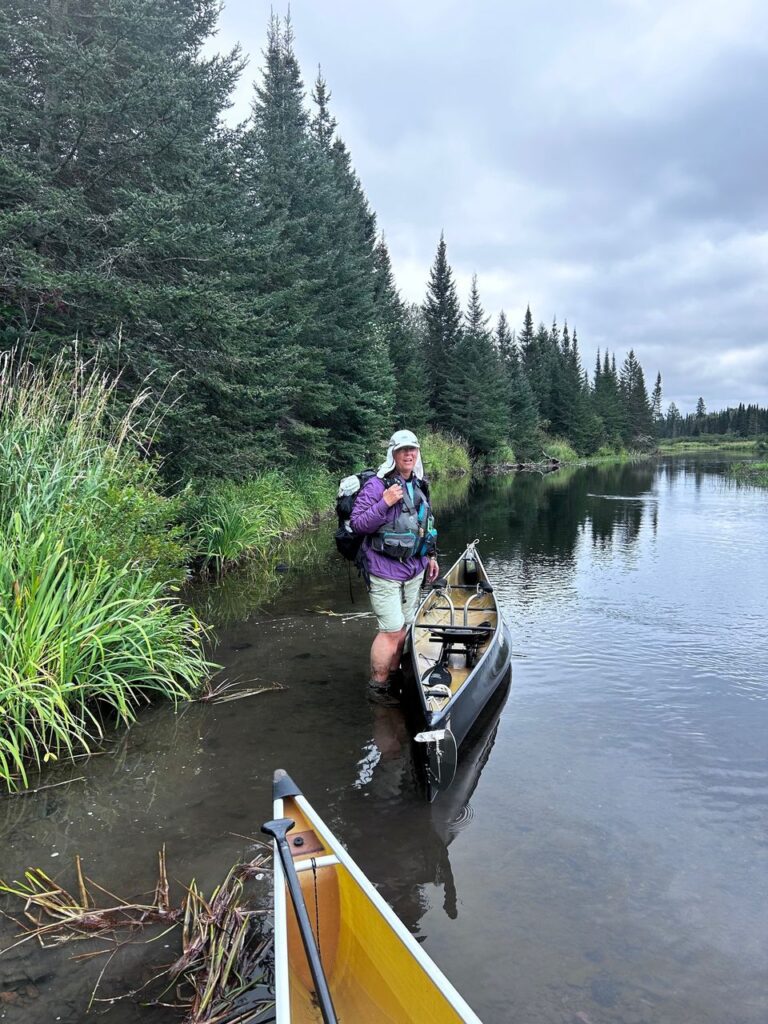
While I had done solo BWCAW canoe trips before, I had never done one with so many miles in so little time (limit of 8 days to complete). Nor had I done the Grand Portage, a nine mile portage from the Pigeon River to Lake Superior that fur traders used to transport goods. While Bruno, the bear got my adrenaline pumping, the Pigeon River and Grand Portage tested my mental fortitude.
Advice to Others:
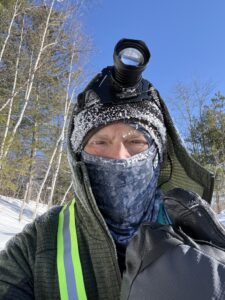
I didn’t jump into this adventure quickly. I started planning and preparing a couple years beforehand. Since I was near the end of my fifties and not in the greatest physical condition, I needed to lose weight and get stronger. I did this by paddling a lot, both on my local lakes and rivers and on solo trips to the BWCAW. Since I live in Minnesota, where the water is frozen half the year, I also started hiking with poles. By using walking poles, I kept my arms, shoulders, and core muscles more engaged. By hiking rough, snowy/icy trails, I also built my balance muscles which are vital for prancing across boulders on rough portages. One of the funnier training methods I used was to portage a canoe around the streets in my neighborhood. A few strange looks and honks from passing vehicles broke up the monotony of portaging practice.
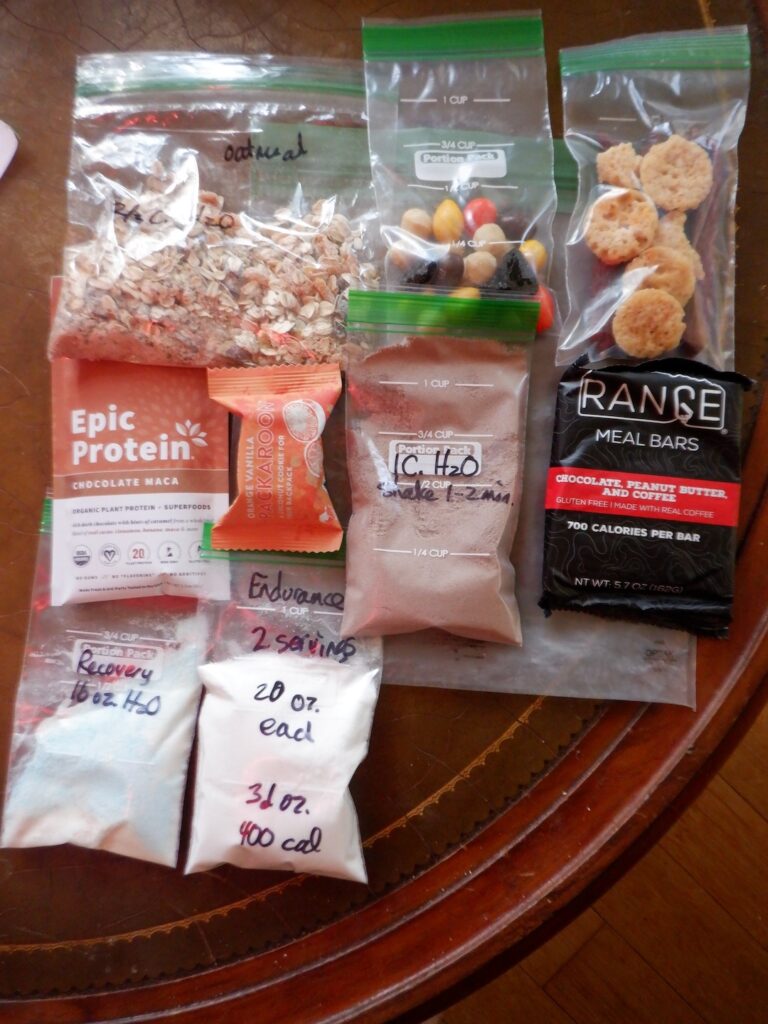
In the beginning of training, my gear weighed about 100 lbs. total, requiring me to take multiple trips across any portage. So I invested in a used, lightweight Kevlar solo canoe that was about 20 lbs. lighter than my 1st solo canoe. That cost me $2000 (about half of new). Then I researched ultralight backpacking and calorie dense nutrition. I shopped for used or “on sale” lightweight gear: carbon paddle, down sleeping quilt, better rain gear, and solo tent, etc. I spent just under $1000. Next, I tested homemade recipes for nutritious, lightweight meals that were quick and easy to prepare out on the trail. My gear now consists of a pack which contains 26 lbs. of camping gear and food. I start with 9-10 lbs. of food which is mostly gone by the final Grand Portage. My canoe and paddling gear weighs an additional 40 lbs. Since I use all this gear on other adventures, it has been a worthwhile investment in my safety as I age.
Besides being able to paddle and portage, what other skills are important for this adventure? Navigational skills are key. The BWCA has no signs to indicate lake name or portage locations. Finding the correct portage path and knowing your location on large island-filled lakes can be tricky. You need to be able to use a map/compass. While some people supplement their navigation with a GPS (especially if paddling after dark), it is not safe to depend 100% on a GPS. There is no cell phone service in most parts of this wilderness area so you must carry a tracking/SOS device like a Garmin InReach or SPOT.
Why should you consider such an adventure? Well, I can only say what draws me back to this challenge (yes, I have since done the 225 mile Voyageur Challenge). It is a combination of the beauty of the wilderness, the mental/physical challenge, and the amazing group of people who participate. While I choose to travel solo on the course, there is an incredible level of camaraderie at the start and finish. So get out there and give it a try!