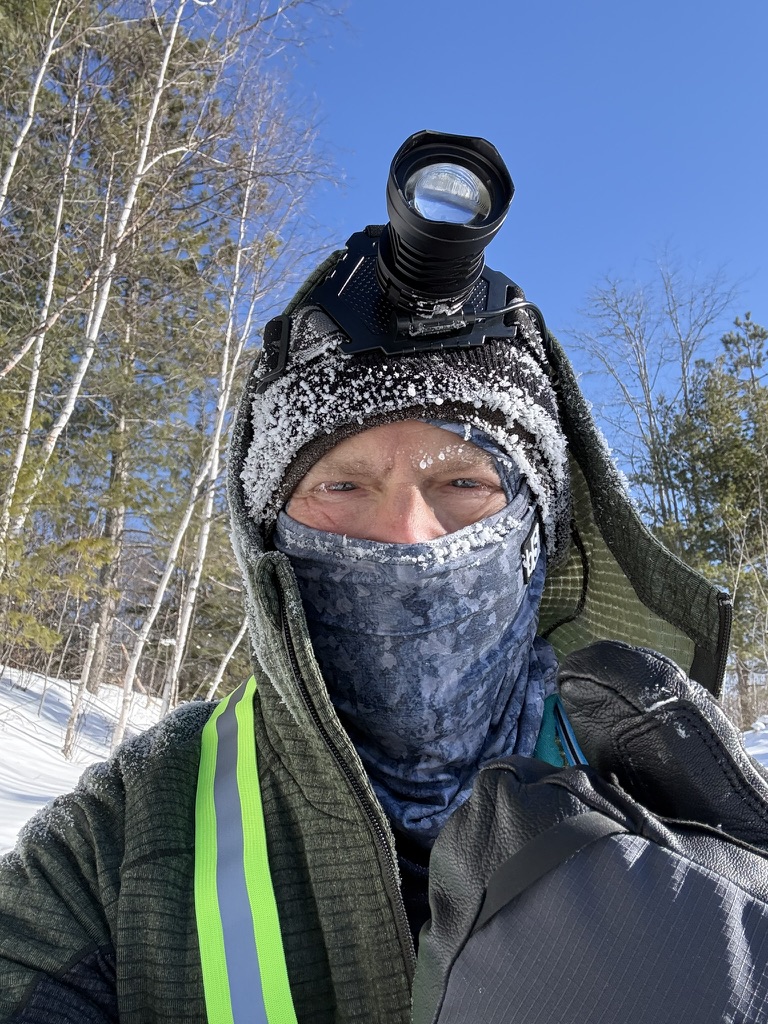
My Adventure: by Dale Simonson
Let me begin with a flashback to one of my more memorable moments.
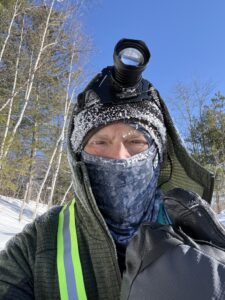
It was 5am and I was 22 hours into what was eventually a 55 hour race for me. The moon had set long ago and clouds and blowing snow obscured any starlight. It was pitch black as I stepped off the trail onto the frozen surface of Elephant Lake in Northern Minnesota. Turning on my headlamp did nothing but create a 10-foot light bubble that reflected back at me off the swirling snow. Too dizzying to keep it on all the time.
The ambient temperature was -15 degrees Fahrenheit (-25 centigrade) with a stiff 15 or 20 mph wind blowing straight across the lake into my face. That put the windchill at about -40 degrees. Too cold to bother with trying to eat or drink anything for energy. Besides, I knew the warm cabin at checkpoint 2 was just 1 miles away across the lake, and the flat lake surface made my 45 lb sled feel mercifully light behind me compared to what was to come when pulling it up the steep hills later in the race.
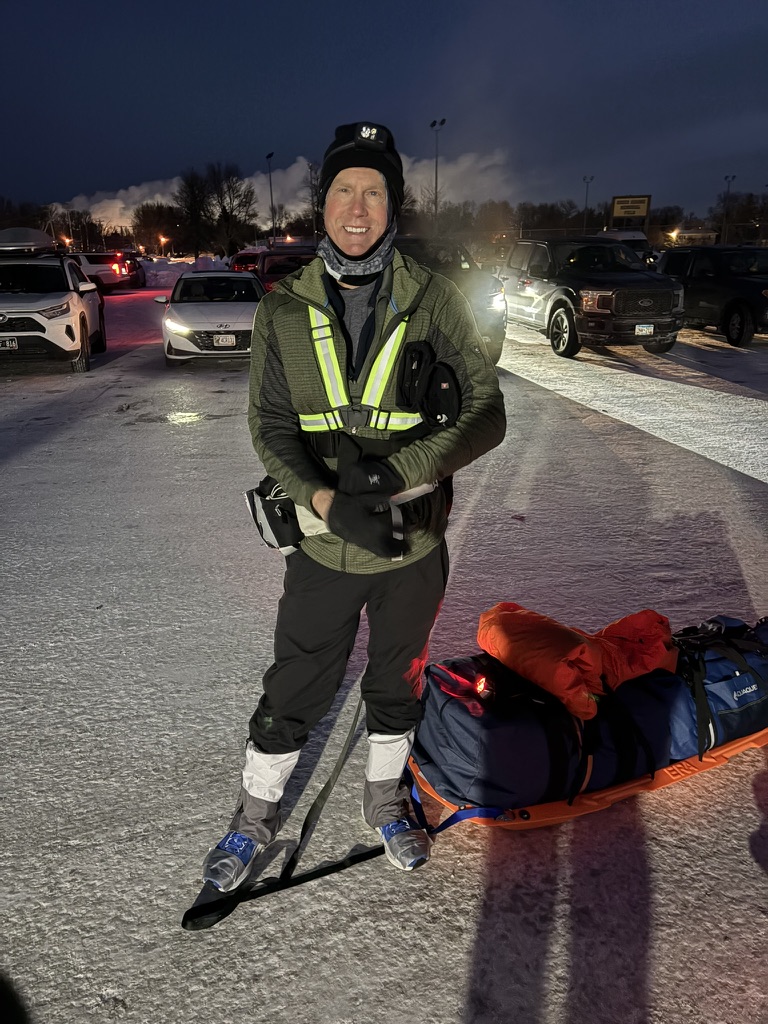
The wind had already erased all footprints in the snow of any racers ahead of me. Fortunately, reflective stakes every 100 yards marked the way across the lake, but I had long stretches after leaving the relative security of one before I could make out the next with my light. It was the wind on my face freezing my eyes shut that assured me I wasn’t walking in circles.
Two distinct thoughts came to mind during that 20 minute crossing. One was of Jack London’s short story, “To Build a Fire.” If you’ve never read it, it tells the story of an unnamed newcomer to the Yukon who slowly perishes while walking in the frozen tundra due to lack of appreciation and respect for the raw power of nature. I really didn’t want to be him. The other thought was one of being utterly alone in a foreign world, as if I was walking on the moon. At least I had the peace of mind that (hopefully), if I laid down on the ice to drift off to sleep, one of the race organizers would notice my satellite tracker stop moving and send out a snowmobile to investigate.
And then I saw it… the glowing lights of the cabin. I had made it! Well, I had made it half way. And as it turned out, I had only made it through the easy half. The steep hills, sleep deprivation, and physical fatigue made the next 33 hours of the race even more difficult.
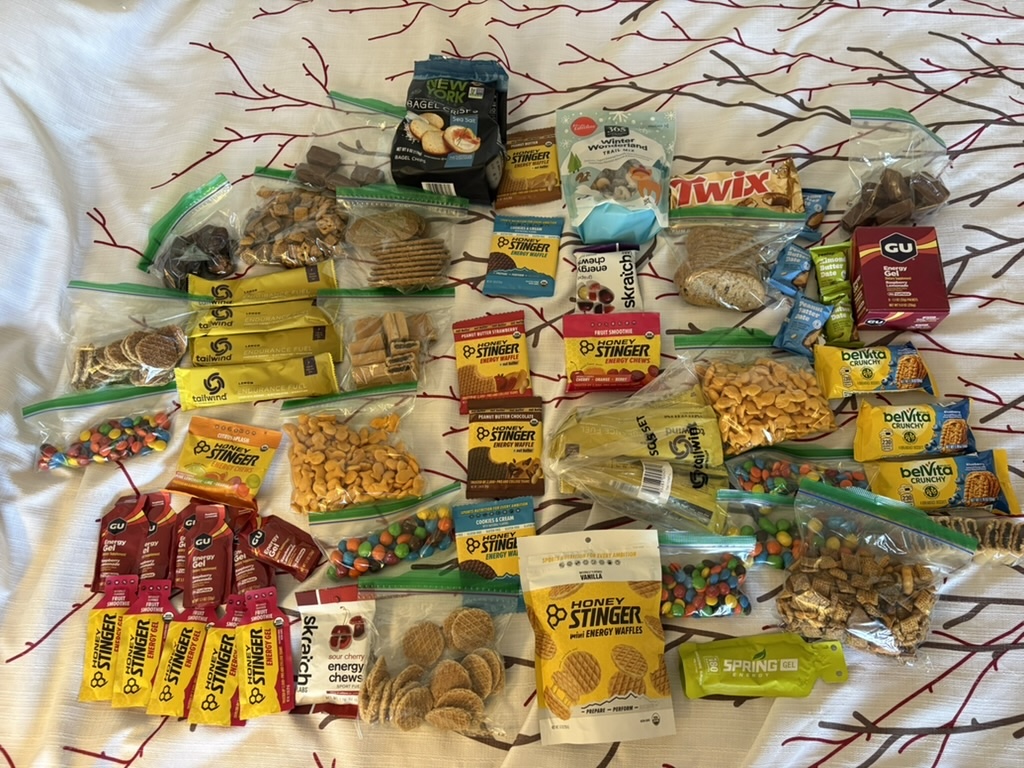
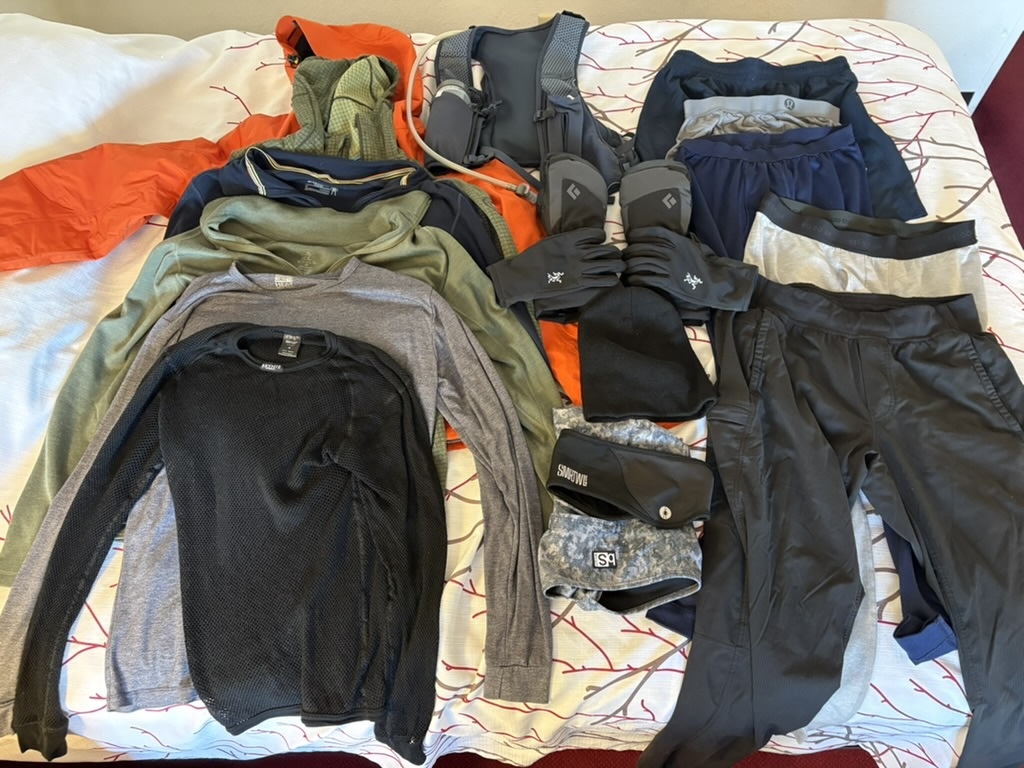
The photos below are of the food I packed in my sled for the 3 days of energy I needed, and the many layers I wore during the race.
So what is the Arrowhead 135 Ultra. It’s a 135 mile trail race from International Falls, MN to Tower, MN, traveling through the north woods of the coldest part of the lower 48 states during what is on average the coldest week of the year. Participants can choose between fat bike, ski, or foot categories and are required to carry a variety of safety equipment including a bevy sack and sub-zero sleeping bag and camp stove for melting snow if you run out of water. The route is remote, with only a handful of desolate road crossings, one country store (which serves as checkpoint 1), one fishing lodge (which serves as checkpoint 2), and one hot tent near a couple of homes (which serves as checkpoint 3). Other than that, it’s just you, the forest, and the occasional fellow racer.
The first 70 miles are quite flat. But as the sun rose the morning of my Day 2 I encountered the hills. Lots of them. Rocky ridges and glacial moraines that cumulatively make for 7,000 vertical feet of elevation gain (and loss) during the race. Pulling the sled up the hills was a new experience for me – something I never had the opportunity to practice during my training.
Advice to Others:
The completion rate for the foot category is historically under 50%, and this year it was a 46% finish rate. Just 32 of the 70 entrants finished, with the majority of drops at the checkpoint 1 halfway point.
While pulling a sled 135 miles makes this race so much more difficult than a typical ultra marathon, it’s the deep cold that is the most unique element of the event. It saps energy and makes everything more difficult. Temperature management is key… dress too warmly or move to fast and you get wet, and then chilled, from sweat. Get too cold and fingers and toes freeze. Dialing in that balance definitely takes lots of practice before trying it over a duration of 2 or 3 days. The cold also makes it pretty much impossible to stop for more than a minute or two. Stopping to dig food or drink out of the sled quickly brings on a chill that’s tough to shake. It also adds challenge to everything from keeping batteries charged for safety lights, and keeping 12 or more hours of drinking water from freezing.
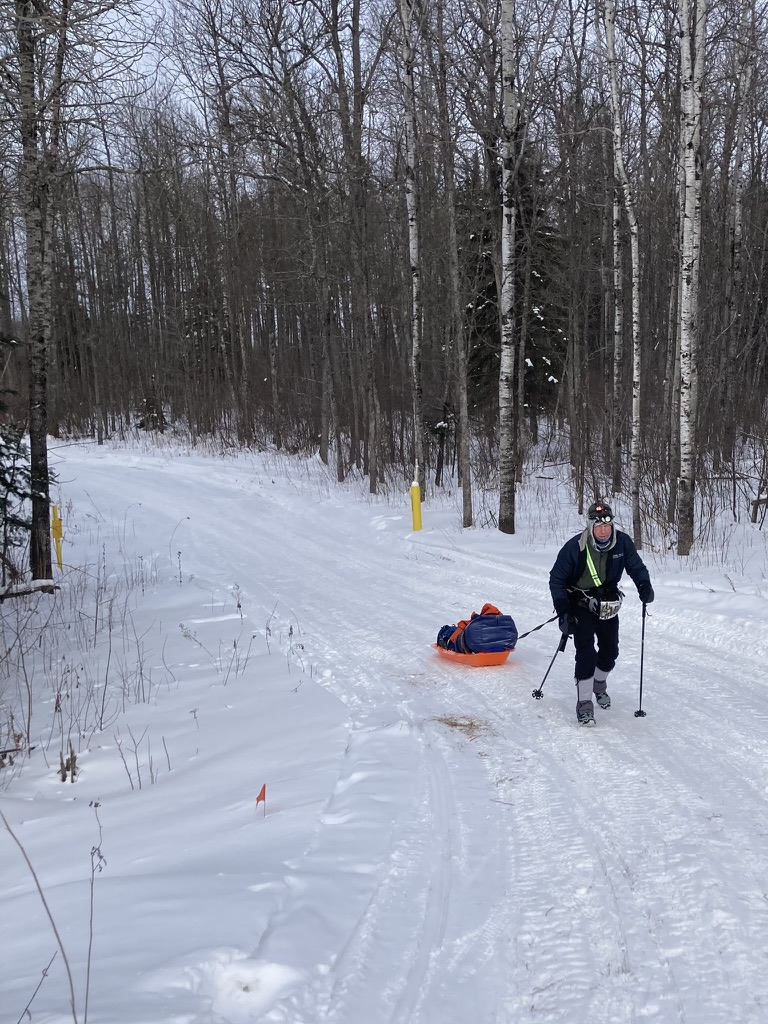
The unique aspects of this race makes for a rookie completion rate quite a bit less than the overall 46% finish rate, and I can see why. There’s a lot you can’t learn until you actually do the thing. But that’s not to say don’t research it in advance. That sort of study in the months leading up to the race was arguably more important to my finish than my physical training. So here are some of the things I learned, either in advance from others, or during the race itself.
- For physical training: Don’t just run for training. Do lots of core exercises, climb stairs or hills, and especially, pull a tire or sled to build those important muscles
- For water: Find a way to keep water warm for at least 10 or 12 hours, or to at least keep it from freezing. My Camelback worked well for convenient access, and if you wear it over your base layer but under you other 4 or 5 layers, you probably won’t have an issue with it freezing. But it’s also inconvenient to refill at the 3 checkpoints because you must strip off all your layers, which takes time. If I do the race again, I will probably plan to put thermoses in a cooler with heat pads instead.
- For sleeping: Most racers sleep very little (just an hour or two) or not at all. Sleeping indoors is only an option at checkpoint 2, so plan accordingly. Regardless, but well prepared to bivvy. What does that mean? Well, make it super easy to do because when your cold, fatigued, and in the dark, taking anything more than a couple of minutes to get into your sleeping bag is going to leave you super chilled. I had my bag and sleeping pads already stuffed into my bivy sack and rolled up loosely in a bag strapped in my sled. I could pull off the trail and jump in that very fast. Of course, the other option (which I never tried) is what they call a shiver bivy. That’s simply flopping down as-is on the top of your packs and dozing until shivers force you awake to start moving again for warmth. Just not for me.
- For Sled Weight: This is the toughest, especially as a rookie. Every pound in your sled must be pulled up 7,000 vertical feet of hills. That takes a lot of energy. On the flip side, you’re out in the middle of nowhere for 12+ hour stretches of time so you need to be self-sufficient with everything you might need. Try hard to keep sled weight down. I probably had at least 10 lbs of unnecessary weight aboard, mostly in things like extra food, clothing, and hiking boots (which I didn’t need). Try lifting a 10 lb weight 7,000 times to get an idea of the wasted energy I expended.
- For Your Feet: Protect them. Of course, blisters can be a problem. But it’s the unique issues resulting from cold, wet feet over the course of many hours or days that can be a bigger problem. Frostbite, chinblains, and trench foot all occur quickly in such conditions. I changed socks 3 times during the race, and shoes once and had no issue. But you can’t be too careful at the checkpoints since it’s impossible to treat any of it on the trail due to the cold. I had really worried that my regular running shoes wouldn’t be warm enough for 48+ hours in those sub-zero temps, but the were perfectly comfortable with just 2 pairs of wool socks. Don’t do boots.
- For Fuel: You gotta keep up with the energy intake, but that can be surprisingly difficult physically (because of the cold) and mentally (because of the cold). Have a variety of easy-to-access foods that can be eaten frozen, because your tastes will change. The best advice I read was BACON. I purchased 4 side-orders of crispy bacon at a restaurant the day before the race, and nothing tasted better during those 3 days. If there’s something I wish I’d brought, it’d be a cup-of-noodle and a freeze dried backpackers meal for eating at the checkpoints with the hot water the volunteers provide.
- Study: Read the various posts on The Arrowhead 135 Facebook page, and talk to race veterans. You’ll learn a ton of tips and tricks. Some are contradictory, so be sure to leave time to try things out for yourself.
Most importantly, have fun. Appreciate the nature. Have gratitude for the luxury of health, time, and money that allows you to do this. Be in awe of the experience, since awe is a sensation we can never get enough of.
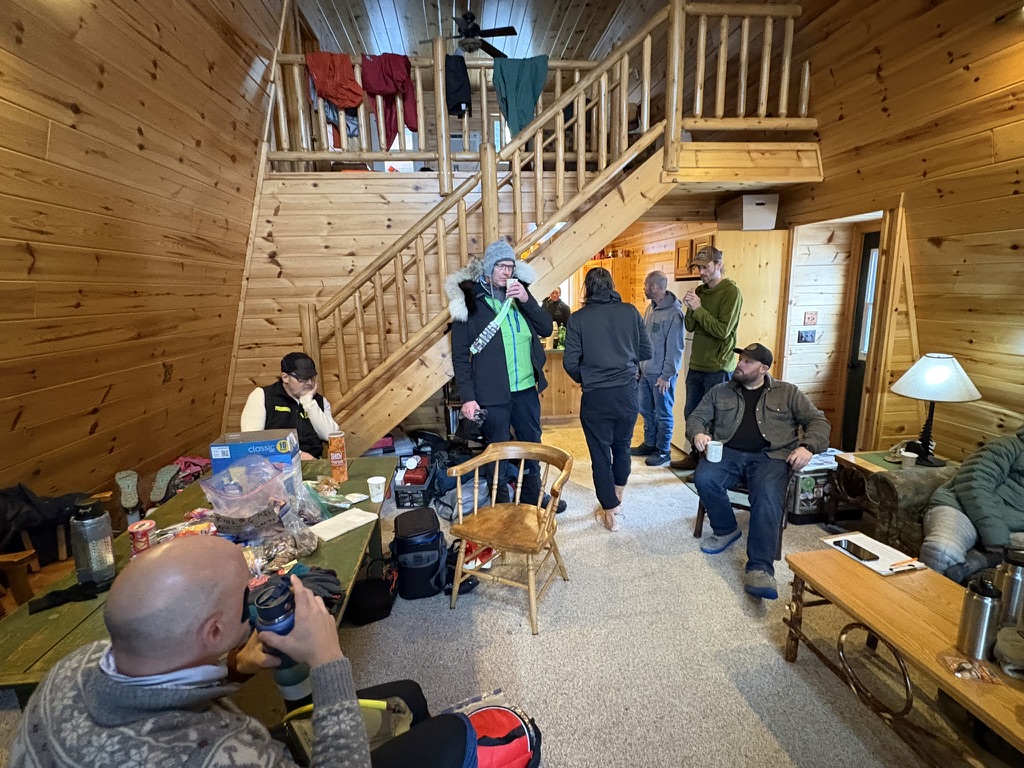
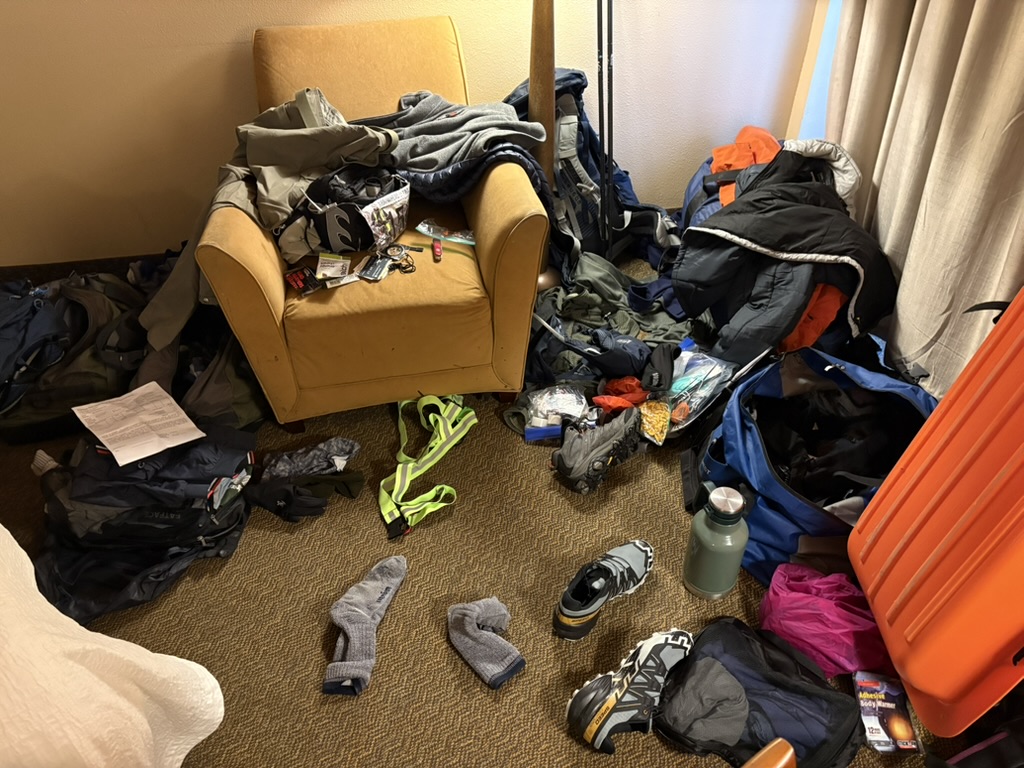
The photos below are of the race’s Checkpoint #2 at mile 71 (yay, fleeting warmth), and my pile of gear in the hotel room after the race.
So why did I do it? People ask me, and it’s a difficult question to answer. And I asked others on the trail, and they too struggle. I think for me, perhaps in order of priority, I do things like the Arrowhead for several reasons, including:
- I’m curious to see if I can. I’m curious about the limits of my physical and mental stamina.
- Signing up for events like this help to motivate my physical training, so I inevitably stay in better shape. And as I approach 60, I want to continue staying in good physical shape to increase my health span and continue being able to do fun things in the outdoors with my kids or with whomever.
- Every time I push myself further and harder, my mental toughness increases. A race like the Arrowhead is more about the mental stick-to-it-ness than the physical strength, so building that grit, that mental muscle, puts challenges of everyday life in better perspective. You realize that what might have seemed like a tough chore or task really ain’t that tough – not compared to what you just did at the Arrowhead.
- It brings satisfaction and confidence in your abilities, both the external validation from friends and family who say they are impressed, but even more so just your own satisfaction of accomplishing a big goal you’ve trained months for.
There are many other reasons. The learnings, the sheer enjoyment of being out in nature, the endorphin rush, the process of preparing, the thrill of the crossing the finish line, the marveling at what the human body and spirit is actually capable of, day-by-day feeling of your body recovering itself from such an undertaking,…
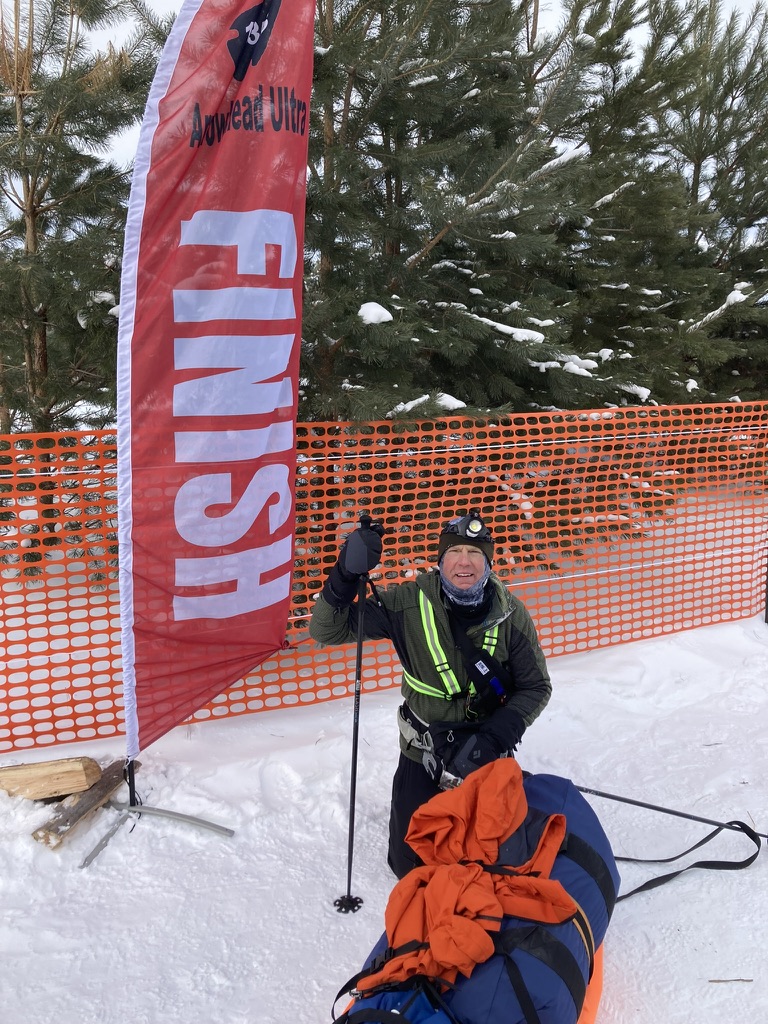
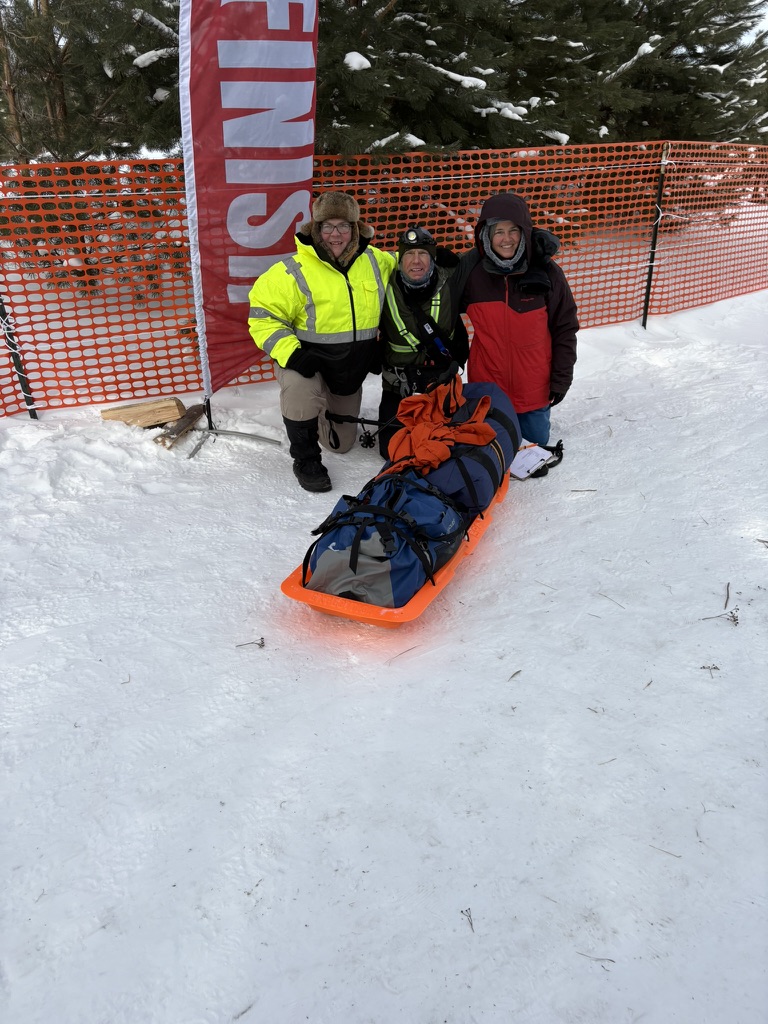
The photos below are me at the finish line 55 hours after starting, and my two sisters joining me there after standing around outdoors for 3 days serving as race volunteers. Thanks Sisters!!