My Adventure: by Dr. Heidi Sevestre and Matthieu Tordeur
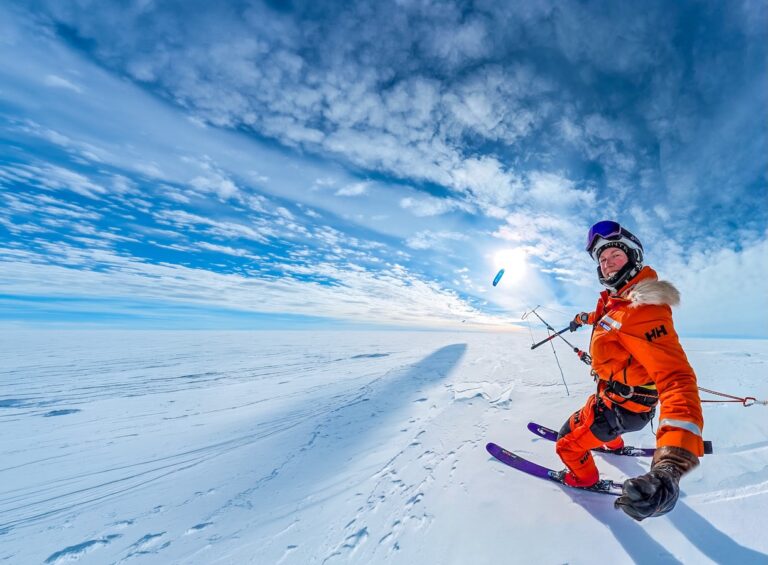
Three years ago, at the end of a field season on Svalbard, Matthieu Tordeur called and asked whether I knew how to kite. I didn’t. The only image in my head was kitesurfing on a warm beach. He had been carrying an idea for years: cross Antarctica on kite-skis, and make the journey count scientifically. Matthieu was the first Frenchman, and the youngest person in the world, to reach the South Pole solo and unsupported. I am a glaciologist, and have been on 50+ expeditions on ice all over the world. Between us we had a route, two radars and no engine.
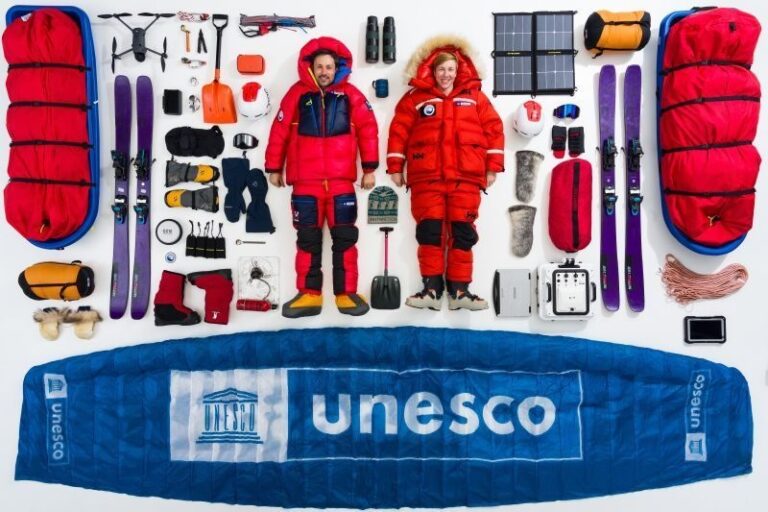
Science in Antarctica usually travels by tractor or skidoo, burning enormous quantities of fuel and depending on pre-laid depots. We wanted to prove that a full scientific programme could cross an entire continent on nothing but wind, muscle and snow. Our goal? Tow two Ground Penetrating Radars, instruments that scanned the ice beneath our feet to better understand how Antarctica responds to climate change. A reminder: Antarctica holds enough ice to increase sea levels globally by up to 180 feet.
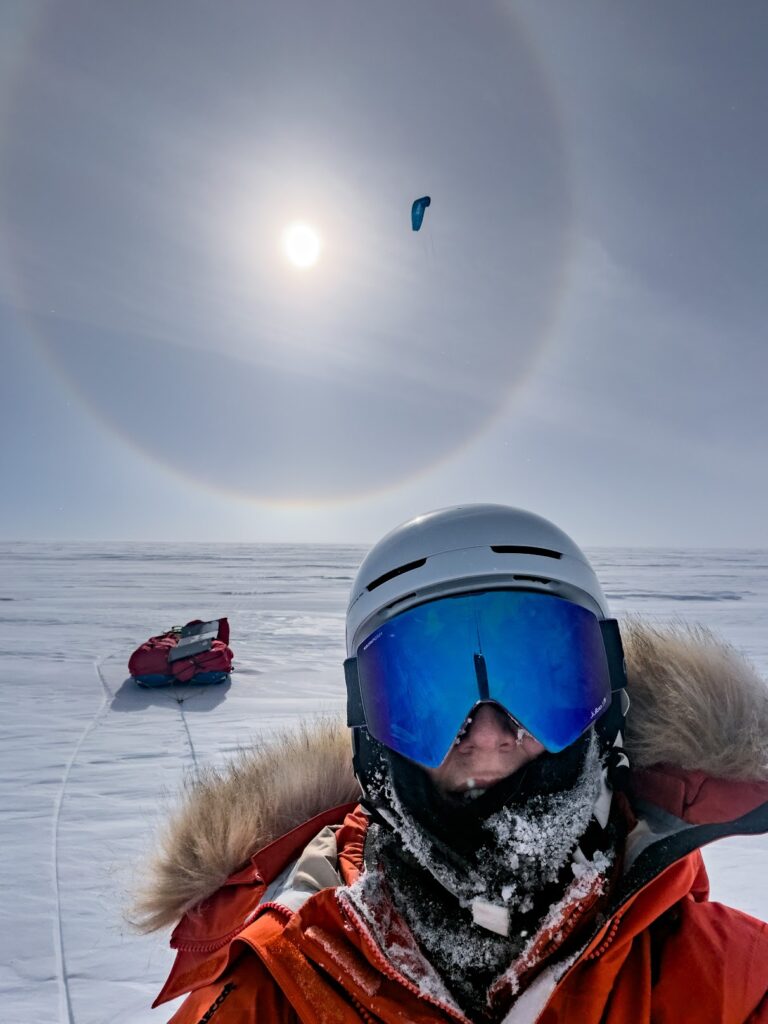
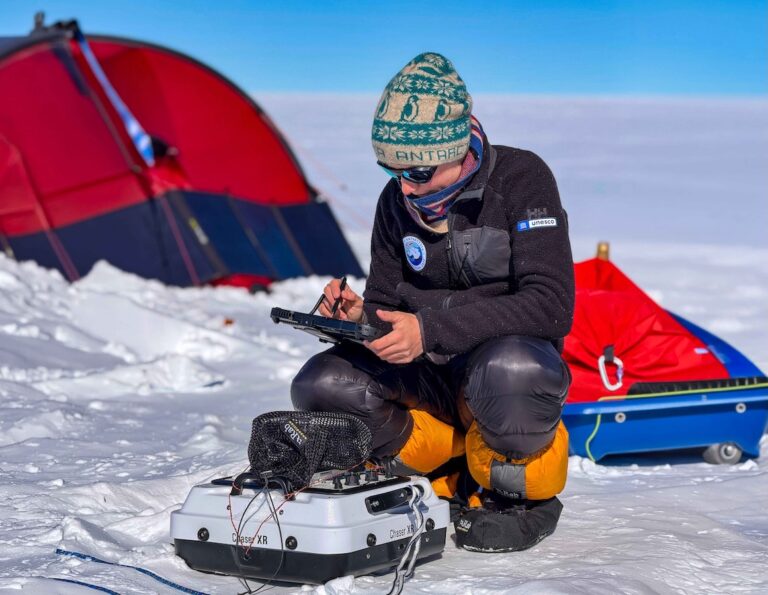
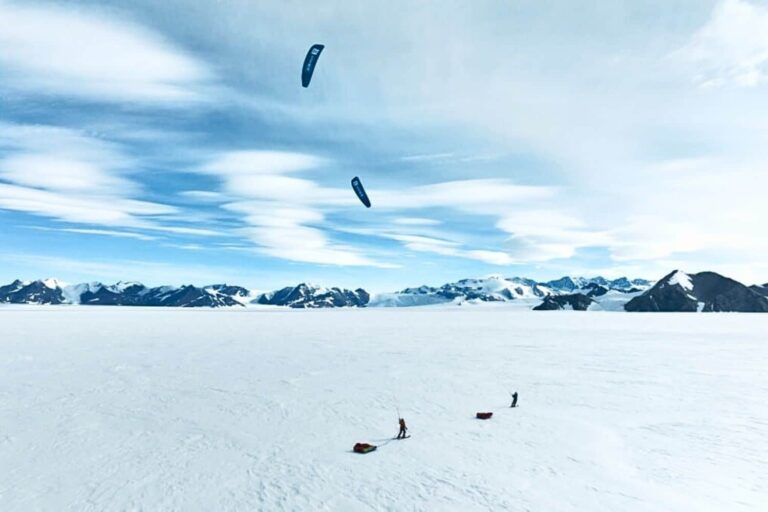
We flew from Cape Town to Novo Airbase and began in early November. Antarctica was unimpressed. For days the wind blew from precisely the direction we needed to travel, so instead of flying we hauled. Our pulkas weighed around 220-250 kilos each, loaded with three months of food, fuel, batteries and instruments. At minus 25 to minus 30 celcius, threading between crevasse fields and megadunes, we gained a few kilometres a day. Matthieu navigated; I nursed the radars. Then the wind turned, the kites filled, and the continent opened.
THE POLE OF INACCESSIBILITY
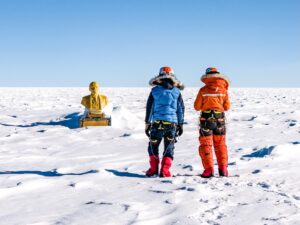
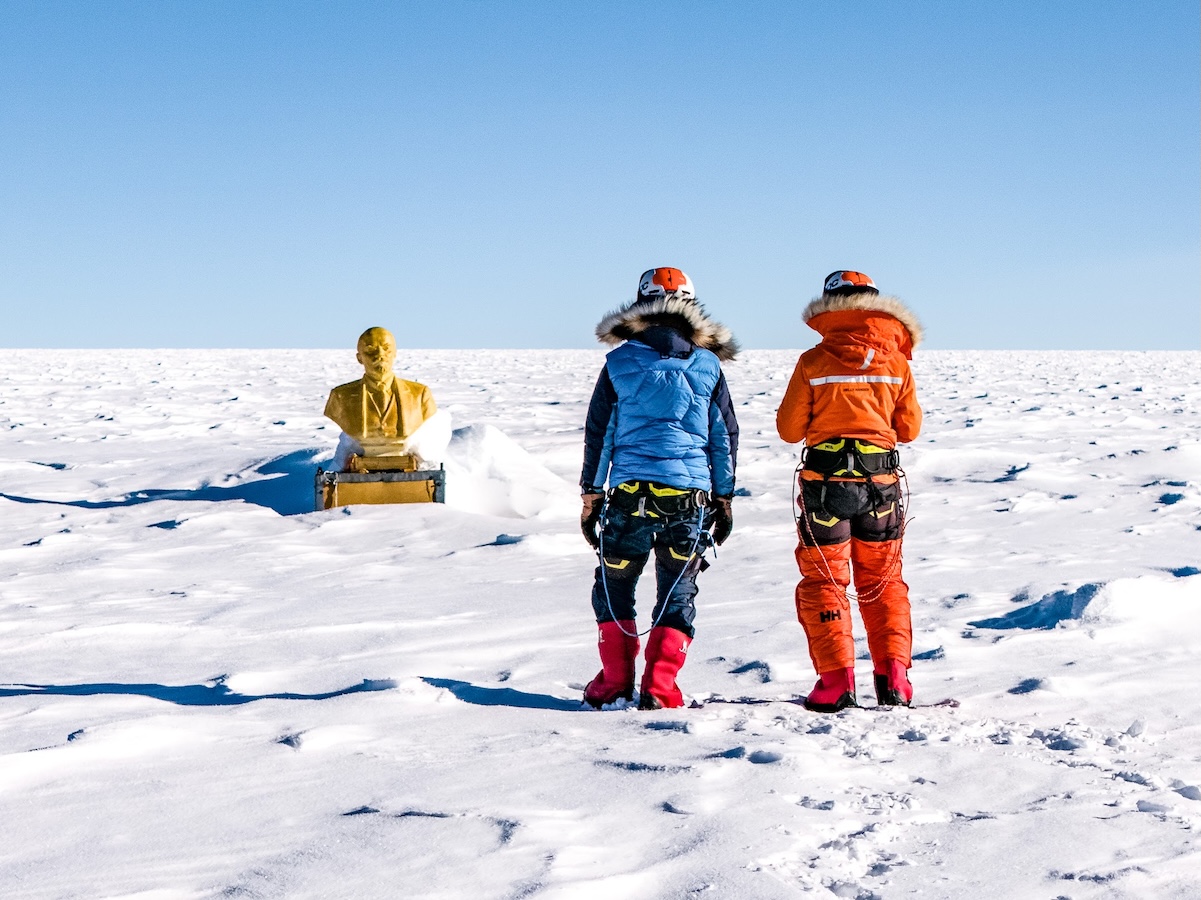
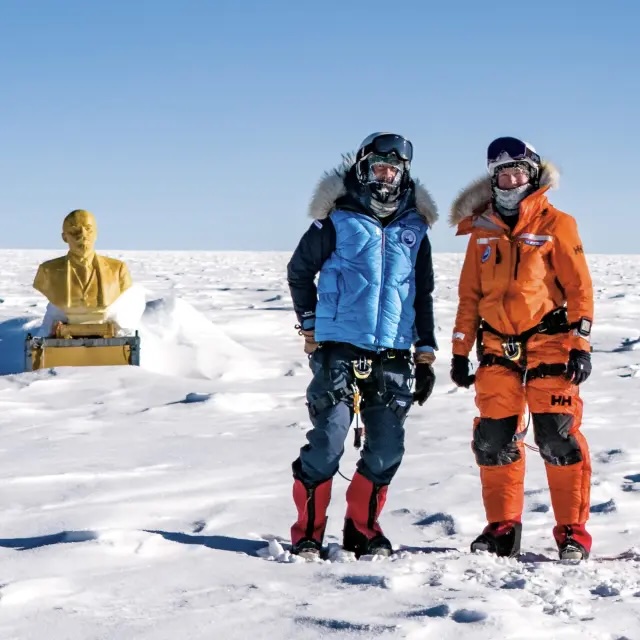
On 14 December, after 42 days and 1,800 kilometres, we reached the South Pole of Inaccessibility, the point on Earth furthest from any ocean, at 3,724 metres of altitude. There is nothing there but a bust of Lenin on the chimney of a station buried under decades of snow. I spent hours walking a grid around it, dragging a ground-penetrating radar by hand at minus 35, the computer tucked inside my jacket to keep it alive. It was one of the hardest data collections of my life, and, as far as we know, the first done there.
TO THE POLE, AND DOWN TO THE SEA
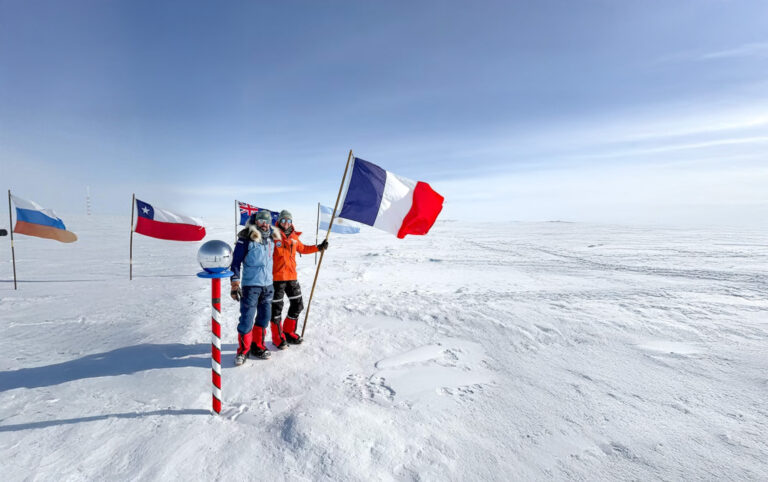
We reached the geographic South Pole on day 61, after 2,700 kilometres, Matthieu ahead of me in a total whiteout, my sledges failing under the weight. From there the continent falls 2,800 metres to the coast in long steps. Matthieu took on the deep radar, a hundred metres of it unrolled behind him, reading ice kilometres beneath our skis. On day 80 we reached the coast at Hercules Inlet. Four thousand kilometres – 2,485 miles.
Both radars came home with us, carrying measurements of ice almost nobody has surveyed, data shared with the British Antarctic Survey, Edinburgh and Tübingen. And we were never truly alone out there. 300,000 children in 42 countries followed us week by week through our education programme. The wind did all of it. That, more than the distance, is what we hope people remember: it is possible to do science differently, and it is possible to share it with the world. Our future depends on Antarctica, every ton of fossil fuel we extract and burn makes it melt. Let’s make sure we have the courage to implement the solutions we need to preserve this ice, and our collective future.
The full story and our educational programme is available on: https://www.underantarctica.com/en