
My Adventure: by Darian Cheffers
Chasing Giants: Big Wave Adventures on the Wild Coast of Western Australia
There are moments in life when everything slows down despite the chaos around you. For me, that moment happens when I turn toward a towering wall of ocean and commit. Big wave surfing in Western Australia isn’t just a sport. It’s a passion, an adventure, a test of nerve, and a constant reminder that nature always has the final say.
Living in Western Australia means being spoiled with some of the most powerful and remote surf coastlines in the world. Long-period swells generated by powerful Southern Ocean storms travel vast distances before colliding with our rugged coastline, creating waves that can range from exhilarating to downright intimidating.
My fascination with big waves started like it does for many surfers. What begins as an attraction to size quickly evolves into a respect for power and a lust for the thrill of the ride. The first time you see a genuine big-wave break from the water rather than the beach, everything changes. The scale is hard to comprehend.
I still remember my first real big-wave experience. I had already paddled into large surf around the Margaret River region, but there was one offshore reef break sitting about 2.5 kilometres from shore that represented the next level. I felt the time had come to test myself.
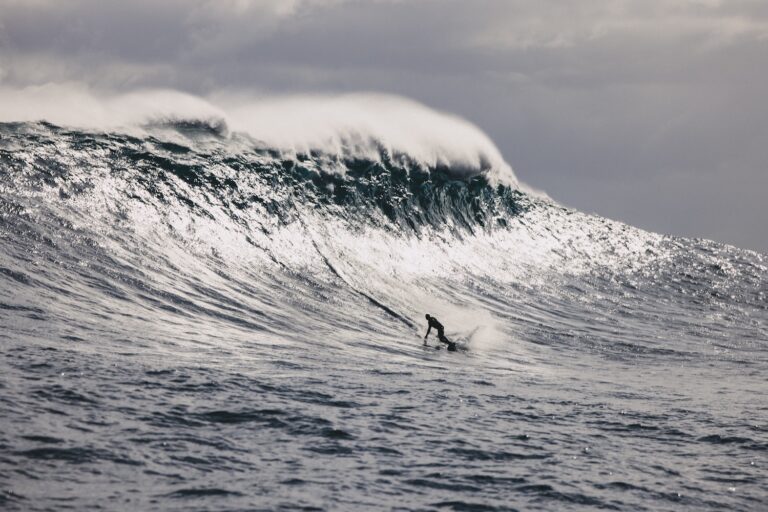
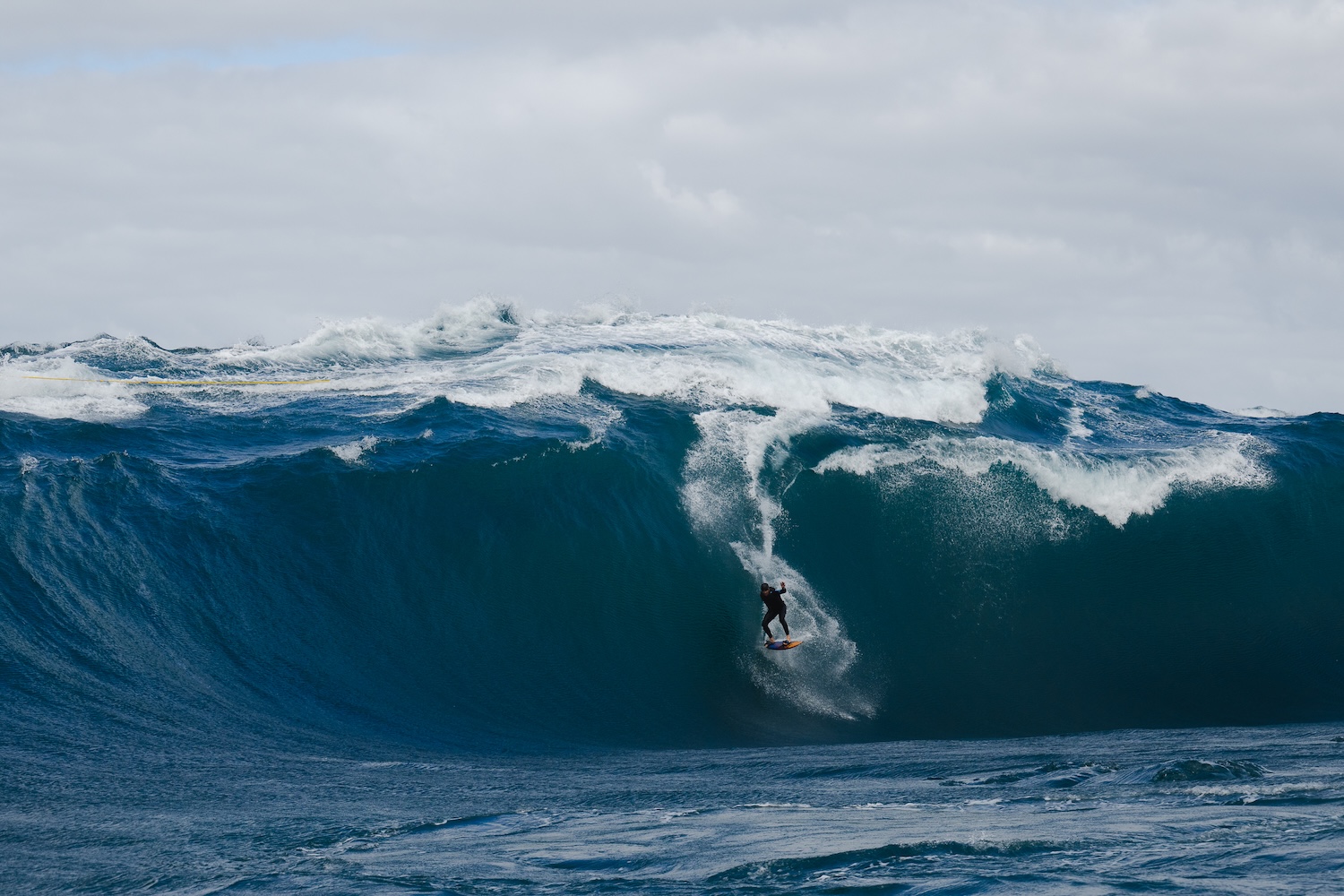
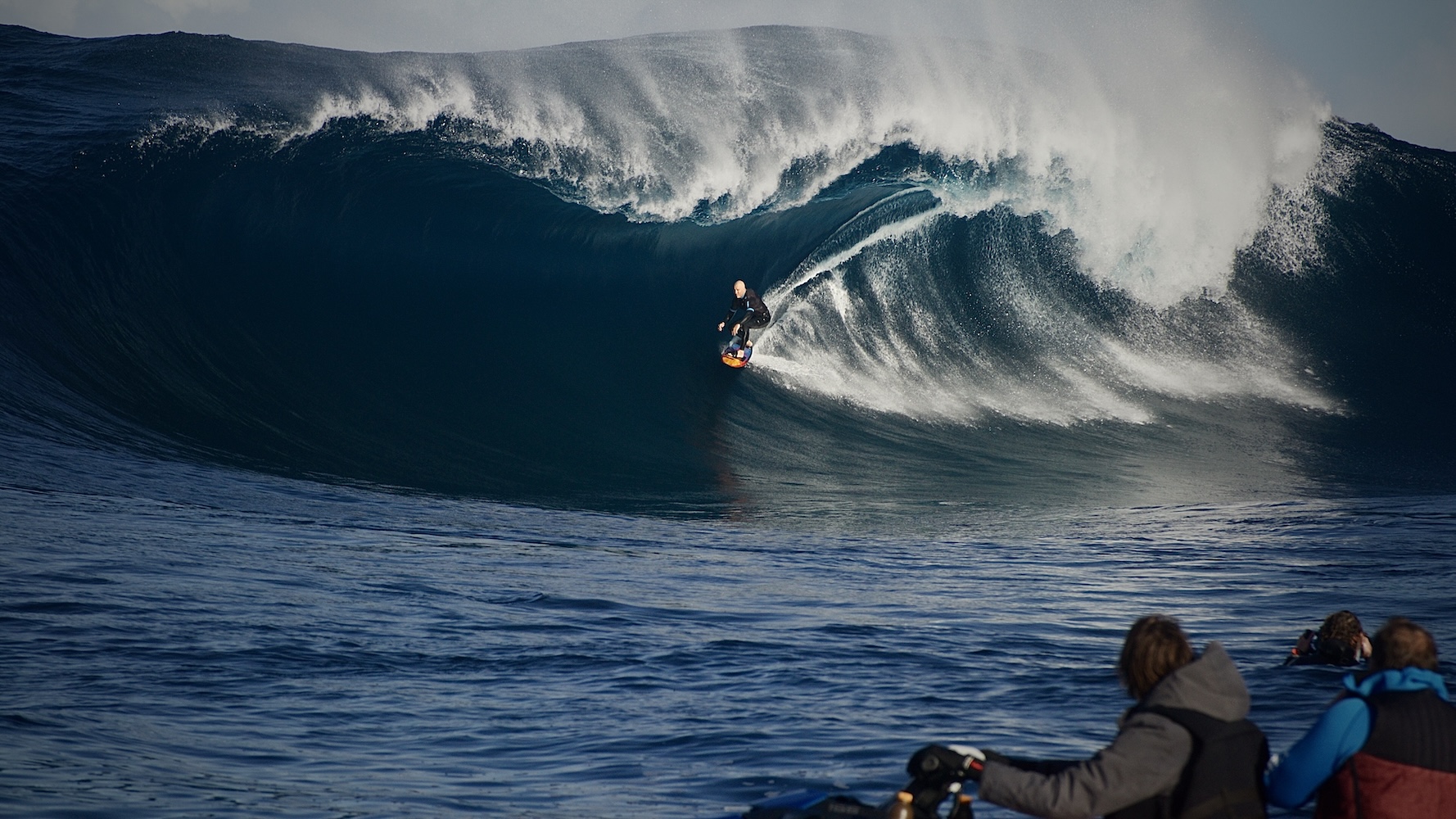
The waves breaking on that reef carried far more energy than anything I had surfed closer to land. Everything felt amplified. My senses were in overload and the adrenaline coursing through my body was almost overwhelming. I was scared, excited, and completely in awe of the ocean’s power. More than anything, I knew I had to catch a wave before the adrenaline burnt me out.
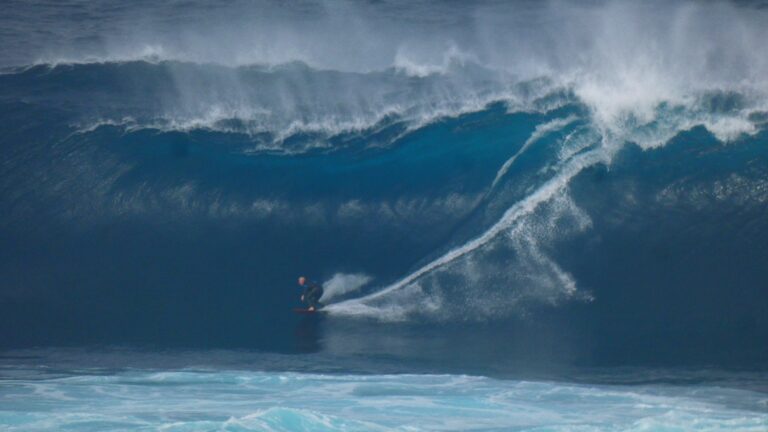
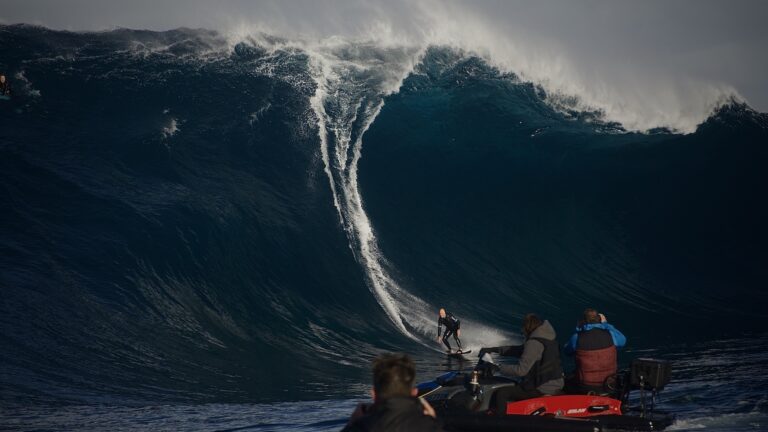
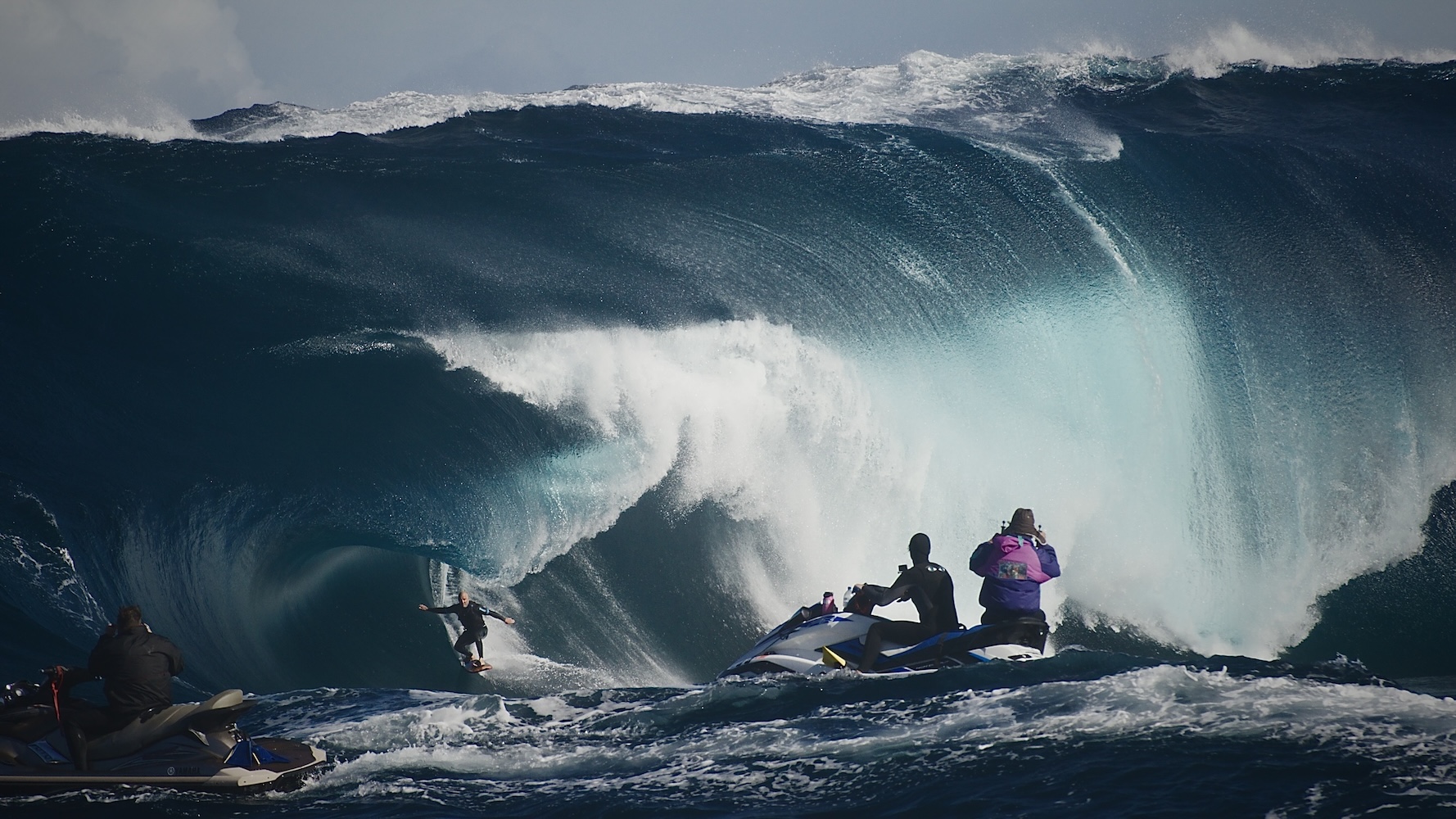
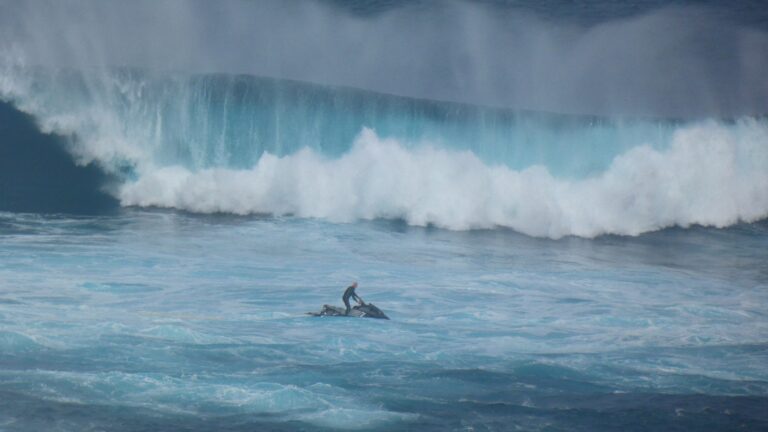
On this occasion I was being towed into waves behind a jetski. The waves were moving at around 65 kilometres per hour, making tow surfing the safest and most effective option. My tow partner and I sat waiting alongside a handful of other teams, photographers and spectators. After what felt like an eternity, my wave arrived.
Our jetski accelerated as a massive swell-line approached from behind. I remember glancing over my shoulder and thinking, “I can’t believe we’re actually chasing this thing.” The roar of the wind was deafening as we raced toward the reef where the swell would eventually detonate.
When the wave began to stand up and my speed matched its pace, I released the rope. The jetski disappeared behind the swell and suddenly it was just me and the ocean.
What I remember most is the silence.
As the wave drew water from the reef and built beneath me, the giant wall of water, somewhere in the vicinity of 8-10 times over head blocked the wind that had been howling moments earlier. Everything seemed to slow down. Time stretched. There was a brief moment of calm before the lip reached maximum height and exploded onto the surface below.
The impact was enormous. The silence vanished and was replaced by a massive, thunderous roar. Meanwhile I was travelling faster than I had ever travelled on a surfboard. Holding a line and maintaining control became a challenge in itself.
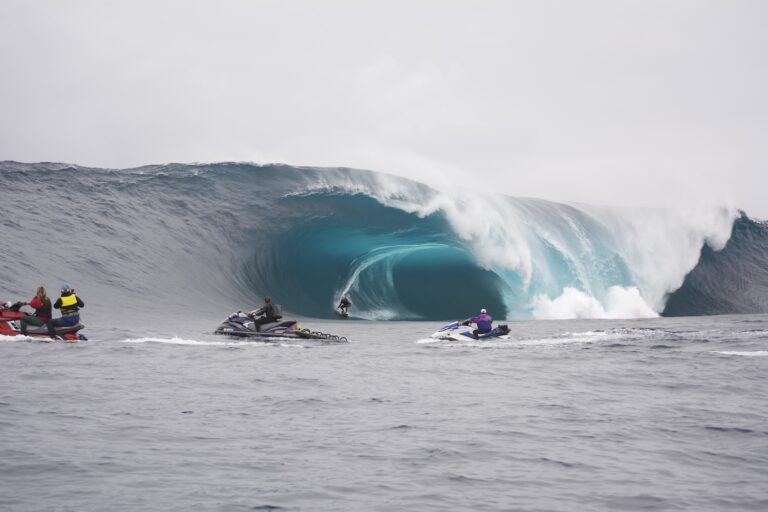
Fortunately, I made the wave cleanly and escaped into the safety of deep water. It was exhilarating, terrifying and breathtaking all at once. From that moment on, I was hooked.
Western Australia offers no shortage of opportunities for surfers seeking larger surf. From the reefs around Margaret River to the exposed breaks of the South Coast, winter storms consistently deliver serious swell. Each season brings fresh anticipation as we study weather charts and buoy readings, searching for the perfect combination of swell direction, period and wind.
One of the things that makes WA big-wave surfing unique is the adventure required simply to reach these waves. Many sessions start before sunrise. Long drives on empty roads, launching skis in the dark, and checking conditions from remote headlands are all part of the experience. There is something special about watching massive swell lines marching toward the coastline from the horizon and knowing soon you’ll be amongst it.
Advice to Others:
The ocean demands complete attention. When the waves get bigger, every decision matters. Positioning, timing, equipment and fitness all become critical. The margin for error shrinks dramatically.
What surprises many people is that fear never completely disappears. A healthy amount of fear is essential. It sharpens your focus, forces preparation and reminds you to respect the conditions. The goal isn’t to eliminate fear but to manage it.
Some of my most memorable sessions haven’t been the biggest days. They’ve been the days when everything aligns perfectly. The forecast delivers, the wind behaves, and it’s just me and my tow partner Zac sharing incredible solo sessions. Those are the memories that stay with you long after you’ve returned to shore.
Of course, not every adventure goes according to plan. Big-wave surfing comes with wipeouts, equipment failures and unexpected weather changes. Anyone who spends enough time in large surf will eventually experience prolonged hold-downs where it feels as though the ocean is determined to tear you apart. Those moments provide a powerful reminder that no amount of experience makes you bigger than the sea.
That’s why fitness, breath control, ocean knowledge, water safety and CPR are essential. Every season presents new challenges and new lessons.
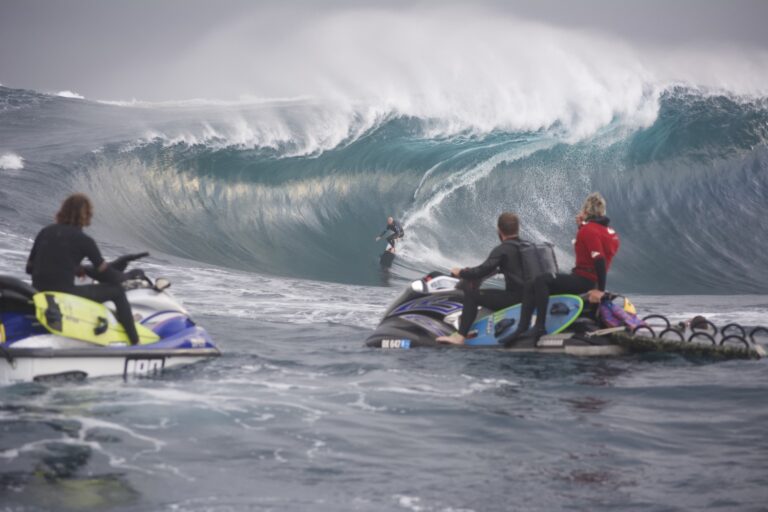
The surfing community also plays a huge role. Despite the individual nature of riding waves, there is a strong culture of teamwork and looking after one another. When conditions become serious, trust in your partners can be as important as trust in your own ability.
There is also something uniquely Australian about surfing these waters. The coastline feels raw and untamed. Vast oceans, rugged reefs, lonely beaches and towering cliffs create a sense of isolation that is increasingly rare. Adding to the challenge is the ever-present possibility of sharing the lineup with white sharks. It’s a risk we all acknowledge when heading to offshore reefs and making it back to shore safely is often part of the reward.
Every winter, when the first major swells begin appearing on the charts, I feel the same excitement I’ve felt for years. There is always another wave to chase, another lesson to learn and another adventure waiting somewhere along the Western Australian coast.
And that’s the beauty of it. No matter how many waves you’ve ridden, the next one could be the ride of a lifetime… or it could be retirement.