


My Adventure: by Ty Andrews
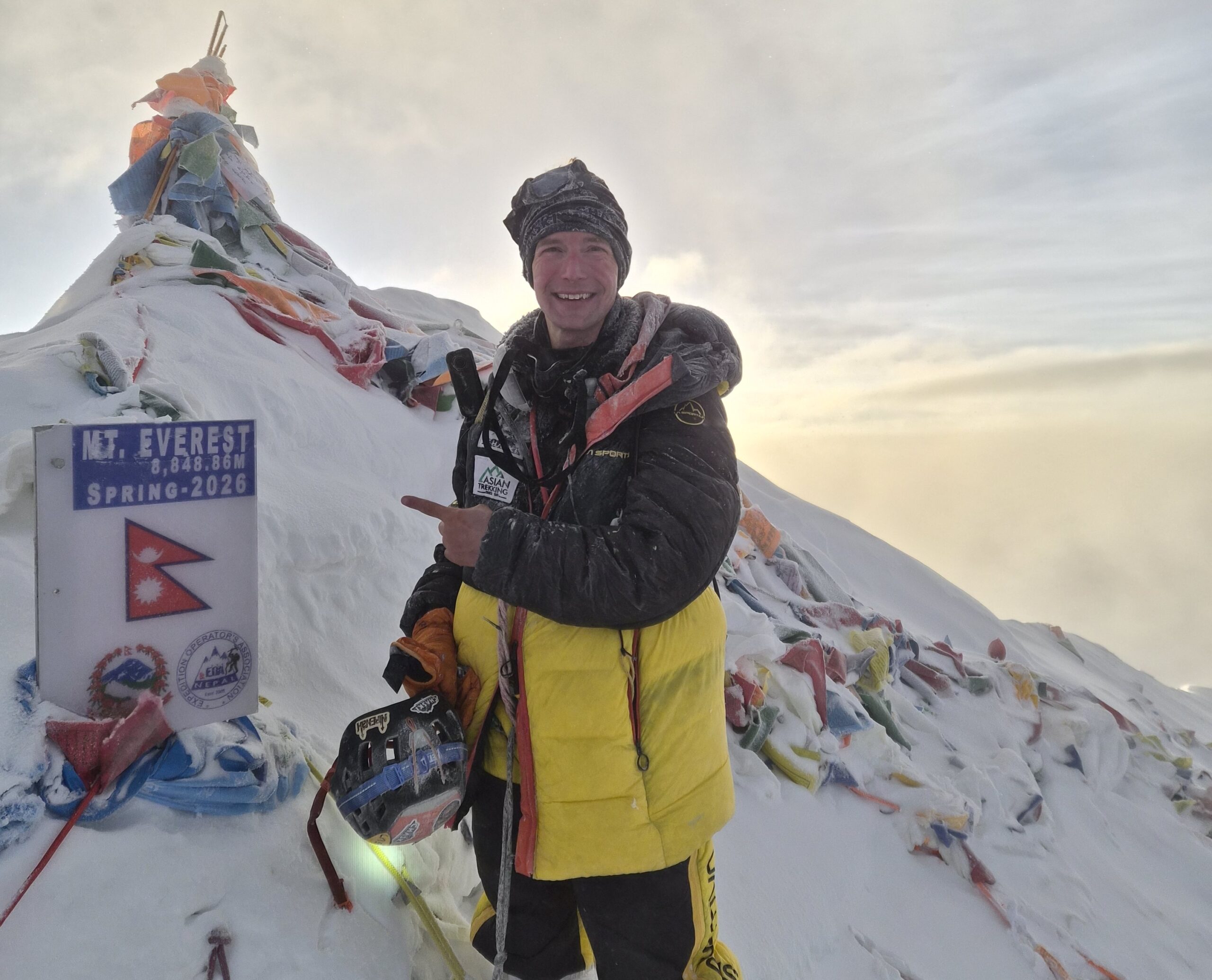
Most climbers need three or four days to get from Everest Base Camp to the summit. On May 28, 2026, the very last day of the climbing season, I did it in 9 hours and 55 minutes, and made the round trip in about 16 and a half. That shaved just over an hour off a record Lhakpa Gelu Sherpa set in 2003. I used supplemental oxygen from Camp 2 up, and I want to be upfront about that.
To me, the road from a high school cross country 5K to Everest makes perfect sense. I was never a naturally athletic kid, but I fell in love with working hard and watching the stopwatch numbers drop. My motivation today is the same: a goal that seems just outside my reach, and the work to close the gap.
Everest only became possible in 2023, when a filmmaker called about a documentary. Until then it felt like chasing a record on the moon, because the cost put it out of reach. After that call, I couldn’t let it go. I’ve always called myself stubborn, and other people call it perseverance. Honestly, they’re synonyms.
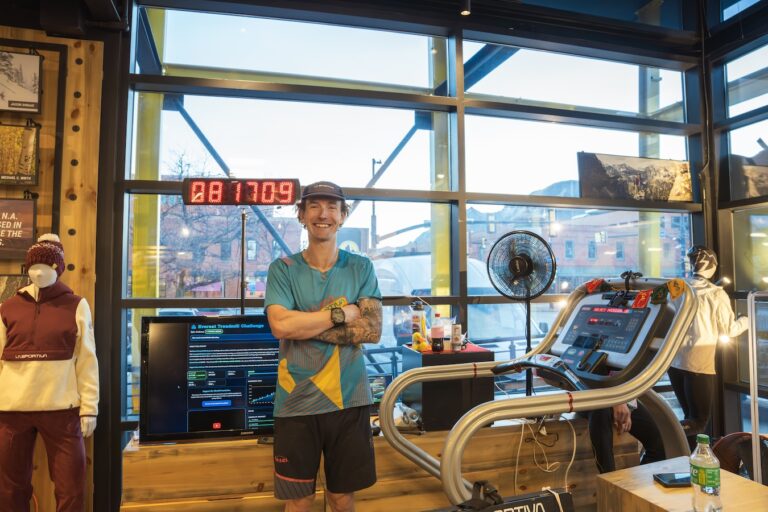
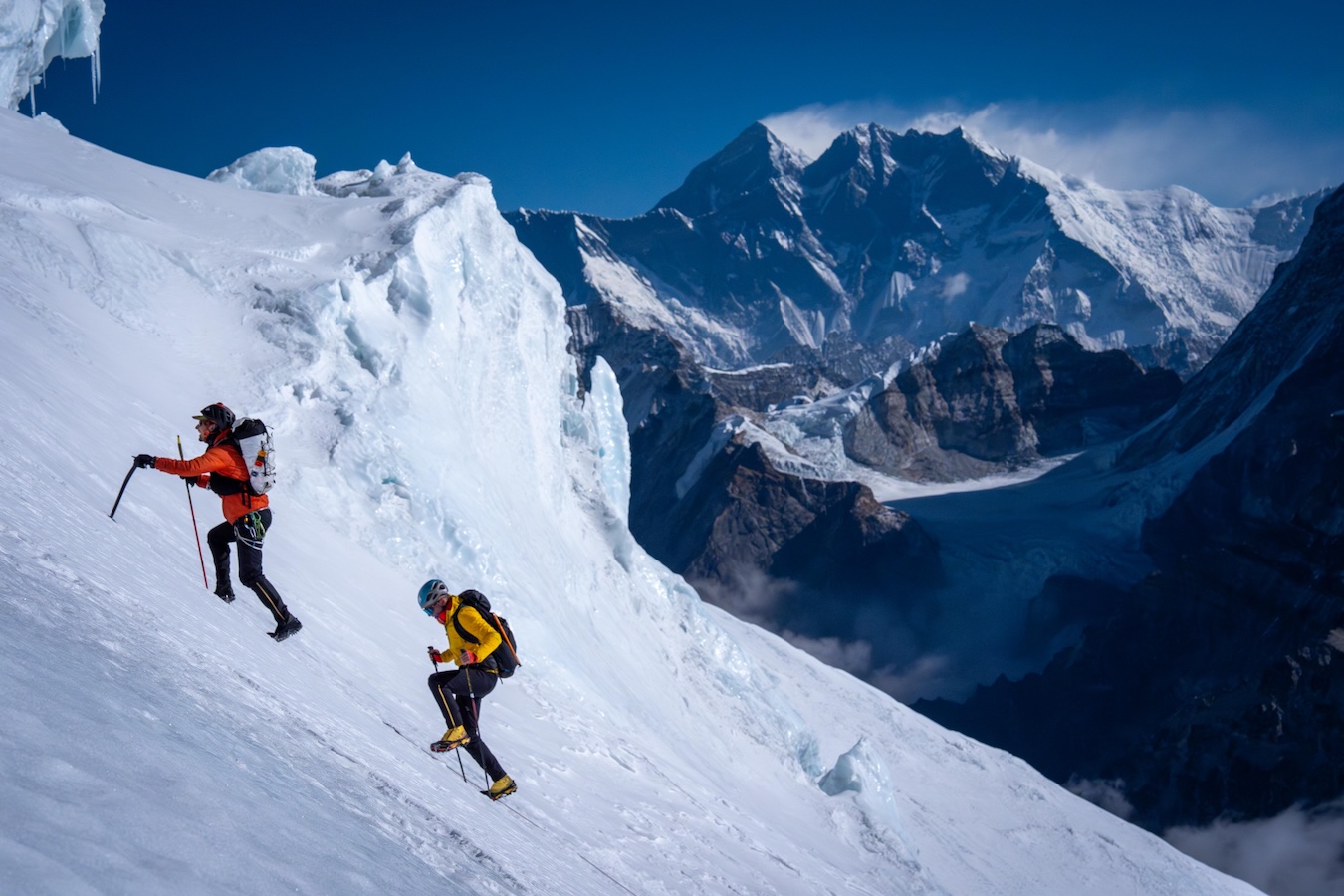
Fitness turned out to be the easy part, because it’s controllable. Everything else also has to go right: your health, permits, weather, crowds. A nasty respiratory virus derailed my first season in 2025, and I’d gone in a bit arrogant, sure I’d get it done. The mountain humbled me. The hardest decision came on my final shot that season. I’d climbed higher than ever, but I was out of radio contact, exhausted, and hallucinating, and I would have been descending dangerous terrain alone in the dark. I turned around. It meant waiting a year, but it’s the decision I’m proudest of in the whole project.
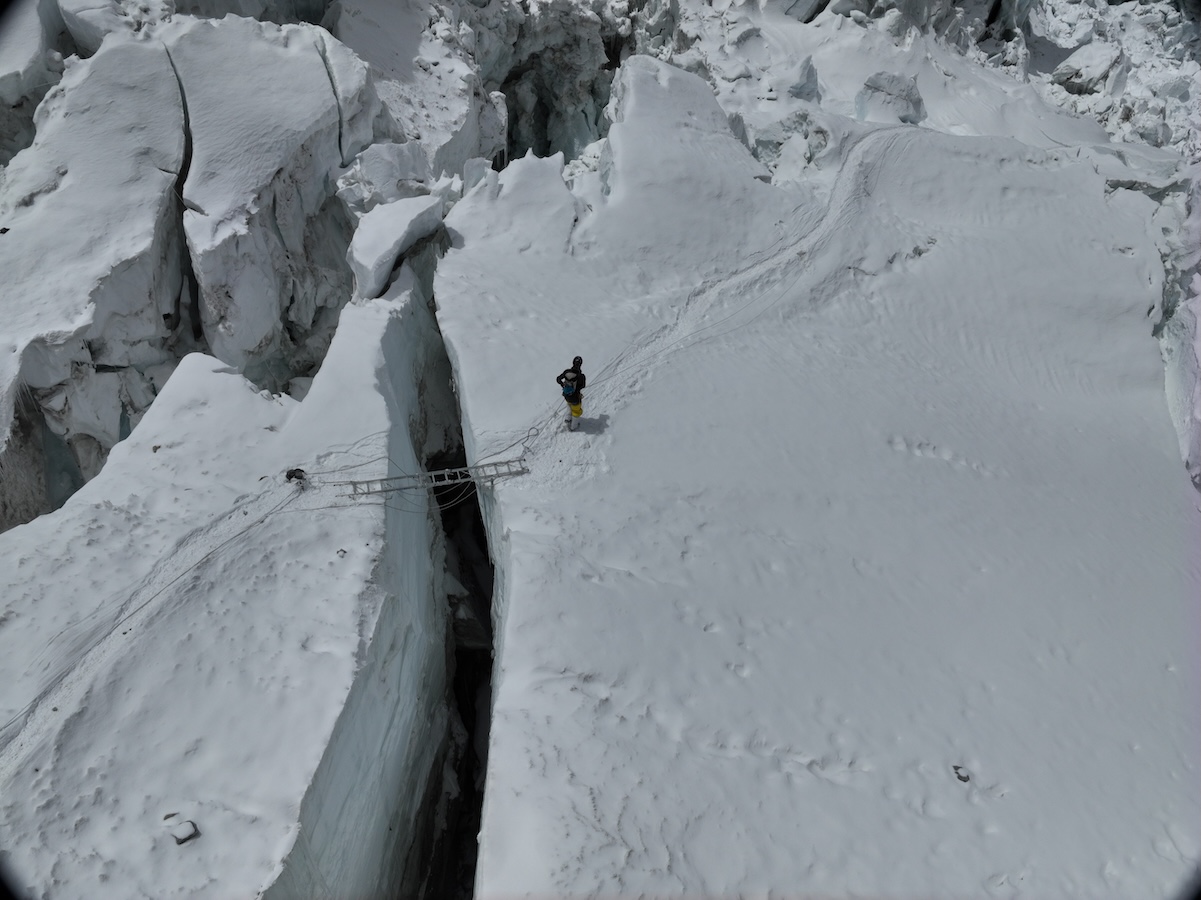
The scariest moment came in the Khumbu Icefall, the most hazardous stretch of the route, where building-sized towers of moving glacier can topple at any moment. I broke through a snow bridge alone, fell into a crevasse, and dangled about 20 feet down in the dark. It took 30 or 40 minutes to dig my way out, in a place where you never want to linger.
By attempt seven, I’d learned patience. The famous photos of hundreds of climbers in line are real, but you can’t set a speed record in a traffic jam, and I have no more right to the route than anyone else. So my team and I waited for the crowds to finish, and we were the last people on the summit all season.
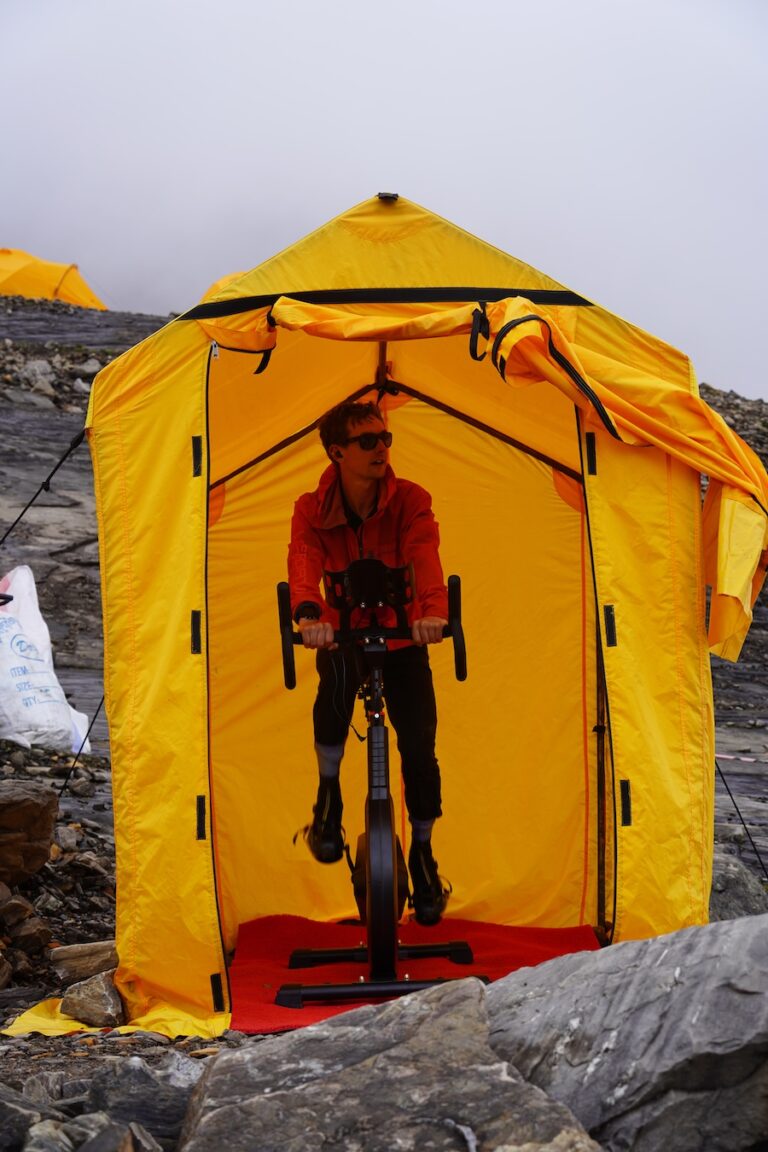
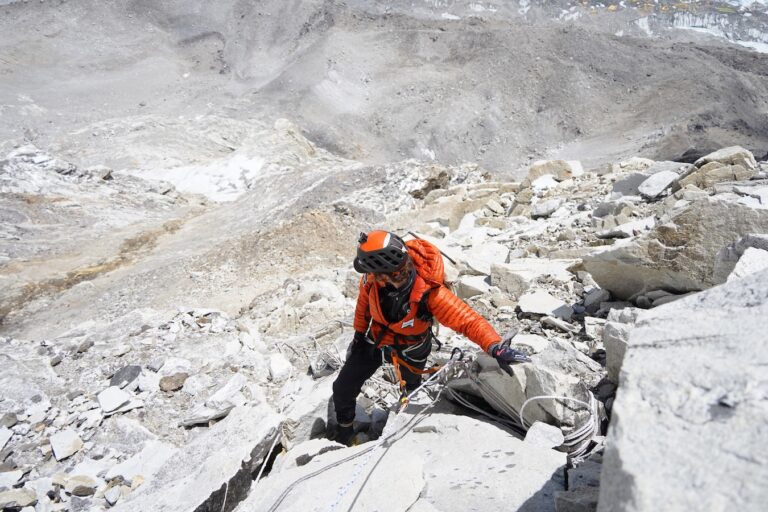
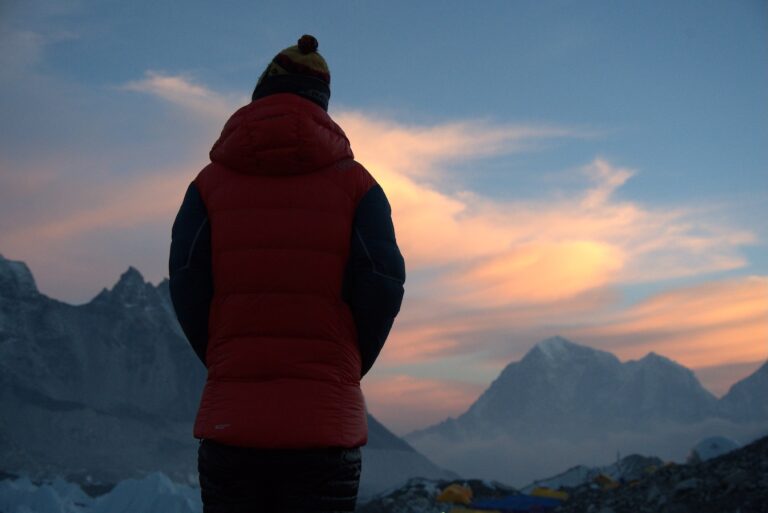
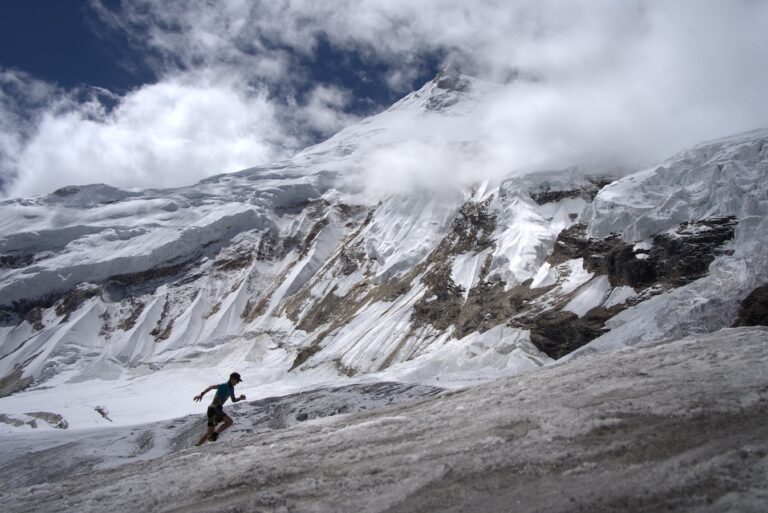
I left Base Camp the evening of May 27, in calm winds under a nearly full moon. Running up the Valley of Silence, with Nuptse on one side and Lhotse ahead, I turned off my headlamp and ran by moonlight, surrounded by the biggest walls on Earth. I saw only about a dozen people in sixteen hours. People joke that Everest is a circus, but that night it was one of the most beautiful, humbling places I’ve ever been. It gave me that rare feeling of being a tiny speck on the side of the planet.
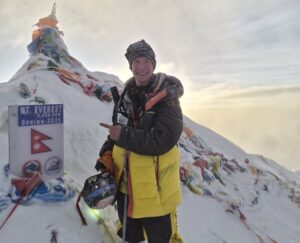
I reached the summit just after 5 a.m. and called my parents and my partner Anna. I’d carried a photo of my friend Greg Krupa, who died in April, and dedicated the record to him. The climb also raised money for Chaski, the nonprofit I run that supports youth athletes in Ecuador and Nepal.
Advice to Others:
Find your sweet spot. A goal should be both intimidating and motivating. If it’s too easy, it won’t fulfill you. If it’s too scary, you’ll quit before you start. It’s different for everyone. Illinois’s high point might be perfect for you even though it wouldn’t challenge me.
Build lily pads. If your dream feels too big, work backwards from it. When I coach athletes who dream of the Olympics, we figure out the qualifying time, then the race to hit it, then the training to get there. Suddenly ten or twenty steps each feel doable. If you doubt you can climb a big peak, start with a one-hour hike.
Learn from failure. The only real failure is one that teaches you nothing. My six failed attempts are the reason attempt seven worked, because I understood the mountain, my gear, and myself far better.
Know when to quit. Quitting gets a bad rap, but in the mountains, turning around is a skill. I quit six times and I’m glad every time. Set your margin of safety before you leave, and honor it when you’re tired and the summit is tempting.
Control what you can. Train your body, sharpen your mind, and dial in your gear. Then accept that weather, health, and luck are outside your control, and have a plan for when things go wrong.
Keep showing up. Some of us feel we can’t not chase a dream, and I’m one of them. If a goal won’t let go of you, stay stubborn and break it into pieces. After seven attempts, the mountain finally said yes.